I’m a Gentile Believer, a devoted mother of five wonderful children, and the wife of an amazing husband. Nature, gardening, and dance bring joy and inspiration to my life. In my spare time, I play the piano, care for my garden, or study the Bible in Hebrew. And I’ll drop just about anything for a game of cards.
My unwavering quest for a genuine relationship with the God of the Bible has driven me to delve deeply into His Word, which guides my journey and shapes my life's path. This exploration, combined with dedication to living out my faith, is at the heart of my writing. I seek to share my insights and discoveries with readers, encouraging them to embark on their own spiritual journeys.
This post contains affiliate links. I only advertise items I personally recommend and may receive a small commission from qualifying purchases. For more information, visit our Affiliate Information Page.
One of the reasons for the existence of the Bible is to help us to get to know God. As we study the Bible, we see His work, how He relates to His people, what He’s capable of and more! It’s through Bible study that we meet Him and get to know who He is.
In the Hebrew culture of the Old Testament, names weren’t merely for identification like they are in our culture today. A name exposed someone’s deeper identity, their purpose, or their place in the world. Through a name, you could learn of a person’s story and it’s the same with God.
But we don’t know God’s true name. The closest we have is the Hebrew letters יהוה, usually pronounced “Yahweh”. That doesn’t stop us from having a chance to get to know Him though His many names though. Each name used to refer to God reveals a different aspect of His character so studying these names can help us to get to know Him better. Through learning the characteristics that give Him these names, we get to learn more of who He is!
In many cases, the names given to God are given not by Himself but by people that encounter Him. Like much of the Bible, one of the ways we get to know God is through the relationship He has with His people and the names they give Him are not an exception to that. When the patriarchs of the people of Israel give God a name, that name reveals to us an aspect of God’s character.
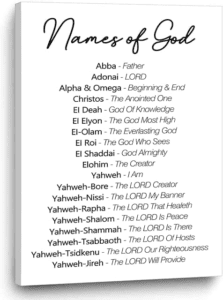
Below are the basic names of God but they’re only a starting point. There are many, many more names of God. To see more, click on the links in the headings.
This is the name that God used to refer to Himself as “I AM THAT I AM” in Exodus 3:14 when Moses asked what to say when the people ask who sent him. He said again to tell the people that “I AM” sent Moses and He followed that by referring to Himself as “Elohim”. Ehyeh Asher Ehyeh can also be translated as “I will be what I will be”.
Why did He give such a complicated answer instead of just a name? We often forget when thinking about God that we’re attempting to get our mortal minds around the supernatural Creator of the Universe. Such a creature would have to be far beyond our understanding for if He fit within the confines of it, He could not be the all-powerful being He is. So it makes sense that a name which labels this awesome supernatural being would be beyond our human capability to understand as well!
Furthermore, this name gives us a glimpse of our God’s eternal nature. He has no beginning and no end – at least not by our human comprehension. He exists now and always has and always will. But to say that he merely exists is too passive. He’s not just “there”. He’s active. He creates, loves, judges, etc., constantly and forever. He simply is.
Found almost 7,000 times and in all but three books of the Old Testament, these 4 Hebrew letters, יהוה, are the consonants used to refer to God. This name is often referred to as the Tetragrammaton, which is a Greek word meaning “made of four letters” and it’s translated into English as “LORD”.
Since no vowels accompany these four consonants in the original Hebrew texts, there’s some speculation on the pronunciation of this name. Many agree that it’s pronounced “Yahweh” (or “Yahveh”), with the vowels appearing as יַהְוֶה, yet others propose that the vowels are as such instead יְהֹוָה. This second pronunciation would render another familiar name for God – “Yehovah” or the common translation of “Jehovah”.
Regardless of pronunciation, יהוה comes from the root word meaning “to be”. This would make sense as God referred to Himself as “I AM”, which is a form of the verb “to be”.
As the name of God is holy, many don’t speak it out of reverence and respect. Instead, it’s often replaced by “HaShem”, meaning “the Name” or “Adonai”, meaning “my Lord” as well as other terms of honor.
The name יהוה is used in situations where God’s interacting with His people, like when He appeared to Moses in the burning bush or breathed life into Adam. It’s combined with other words to show us His character even more specifically.
Plural for Eloah (אֱלֹוהַ ) and from the word El (אֵל), this is the first name of God given in the Bible in Genesis 1:1, just before God created the universe. This name implies God’s mighty nature. Like יהוה, Elohim is attached to other words to expose additional aspects of His character.
Elohim doesn’t just refer to the God of Israel but to gods in general or even to angels, although it’s not capitalized in this case to indicate that. For example, it’s the word used in Exodus 20, verse 3, in the command “You shall have no other gods before Me”.
Why is the plural form Elohim, used? Well, the Bible doesn’t directly explain it but it’s not uncommon in Hebrew for something we think of as singular to be found in the plural form. Some examples are “water”, which is mayim (מַיִם) and “face”, which is panim (פָּנִים). Some say Elohim in the plural form refers to the Trinity but others say that it’s a form of royal “we”, or an “honorific plural” used by or in reference to those of great importance and power.
Elohai, meaning “my God”, can be found where Ruth stays with Naomi in Ruth 1:16, when she says “Your people shall be my people and your God, my God”. It’s used in many places throughout the Old Testament and was used by Jesus when he quoted David (Ps. 22:1) before his death on the cross by saying “my God, my God, why have you forsaken me?”.
Translated into English as “Lord”, Adonai is an extended form of the word Adon (אָדוֹן), which is also a name for God but can be used to refer to men or angels as well.
As I said above, Adonai is also often used as a substitute for יהוה when reading scripture or praying out loud out of respect for God’s name. It’s also said in Jewish liturgy when יְיָ has been written in place of יהוה.
This name of God can be found in combination with Yahweh as Adonai Yahweh (אֲדֹנָי יַהְוֶה), which is another name translated as “Lord GOD” as in Genesis 15:2, “Abram said, “O Lord GOD, what will You give me…”.
Adonai can also be conjugated to be “our Lord” or “our Master” as Adoneinu (אֲדֹנֵנוּ) and Adoni (אֲדֹנִי), which means “my Lord”. These are shown in 1 Samuel 16:16 and Joshua 5:14, respectively.
Other Names of God
There are many names of God that aren’t used in conjunction with Yahweh, Elohim, or Adonai but are important to learn in that they also reveal attributes of God that can help us get to know Him. They’re words typically used to describe human attributes, such as Chatan (חָתָן), meaning “bridegroom” or Shofet (שֹׁפֵט), meaning “judge”.
In studying these names, we conclude not that God is human-like but that we are somewhat God-like. This aligns with what we already know about our creation, that we’re created in God’s image. Thus the human attributes we use to describe God are actually His attributes that we get a glimpse of even through our humanity.
If you’re being blessed by the study of God’s names and attributes, make sure not to miss the many additional names by clicking on the links found in the headings above.
This post contains affiliate links. I only advertise items I personally recommend and may receive a small commission from qualifying purchases. For more information, visit our Affiliate Information Page.
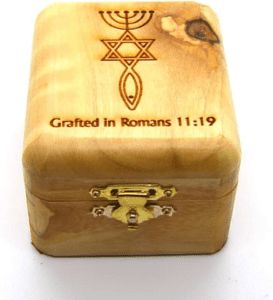
As Gentile believers in Jesus as the Messiah (a.k.a. Christians), Paul says in Romans 11 that we’re “wild olive” branches and that we’re “grafted in” to the “olive tree” to become partakers in the original tree – God’s promises to His people. Paul’s analogy is descriptive, showing how Gentile believers have a part in the Kingdom of God.
And I like being called a wild olive branch, don’t you? It sounds like we’re untainted in our wildness yet dignified in that we’re part of something rich and established. While this may be part of what Paul meant, there’s a lot more in this analogy for us as Christians.
Before the Wild Branch
To get some background, look at what’s going on at the beginning of Romans chapter 11. Paul is in the middle of telling his Jewish audience that they missed the messiah. By rejecting Jesus, they missed the message of grace they were offered and were still focusing on being saved by their works while waiting for the messiah. Verses 11-16 describe how the Gentiles have a chance at the Messiah because Jesus’s own people rejected him. Paul still wanted the Jewish people to see their need for Jesus (and some of them did!), but he describes their rejection as the “reconciliation of the world” (Rom. 11:15).
How blessed we are, Brothers and Sisters? It is so sad that God’s people, the Jews, shunned the messiah they had prayed for over so many years, but God brings a blessing in even something as heartbreaking as this. And it’s for us! Because of this, we have access to Israel’s Messiah, now the Savior to the entire world!
I love gardening more than most, but I haven’t attempted grafting. It isn’t easy. It’s an expert-level sort of thing. A tree farmer must do a graft correctly and carefully and take great care of the scion – the area where the two trees are attached. Even after a LOT of work and attention to detail, the graft may not take! Even when it does take, the new offshoot may not be productive. A well-grafted branch not only grows but also produces well.
Grafting only works when the new branch is of the same family as the original tree. For example, you can’t graft a cherry branch onto an orange tree. A successful graft requires a sort of “communication” between the old and new trees, which can only occur between trees of the same type.
A Farmer’s reasons for grafting may vary, but the overall goal is to get the best of both varieties. Combining the trees into one shouldn’t obscure the character of one and highlight the other but reserve the essence of both. Generally, one of the two trees has quality rootstock, and the other produces desirable fruit. Grafting gives the gardener the best of both worlds – a tree with solid roots and good fruit. The nature of each tree is reserved while allowing the best qualities of both to shine through.
Two Types of Olive Trees
In the Middle East at the time of Paul and today, two main olive tree types are commonly grafted – the wild and the cultivated varieties. The cultivated trees grow olives used for food and to produce olive oil. Wild olive fruit isn’t as flavorful and is not usually eaten. Grafting won’t make a wild branch produce olives of cultivated quality or change the solid root structure of the original tree. It would, however, allow the wild branch to benefit from the established roots and healthy base of the cultivated tree and help it to produce healthy fruit of its unique variety.
Understanding Paul’s Symbolism
To clarify Paul’s analogy, Gentiles that recognize Jesus as the messiah and thus their need for him are the wild olive branches. The cultivated olive tree and its roots represent the promises of God given to Abraham, Isaac, and Jacob in the Old Testament. He is saying that, although God made these promises to the Jewish people, we have a part in them, as Gentiles, due to our belief that Jesus is who he says he is. Our faith strengthens us and allows us to be “sons of Abraham” (Gal. 3:7).
So, now that we’re grafted in, what are we? While the grafting process entitles us to be heirs to God’s promises to the Jews, it does not make us into Jews. After the graft, we maintain our original character – Jews stay Jews, and Gentiles stay Gentiles. The change is that we’re then one in our Messiah, Jesus.
The Branches Broken Off
When grafting, cutting some branches off the original tree is usually necessary to allow space or a better nutrient load for the new branch. Paul says in his grafting analogy that Jesus came to save his people, the Jewish people, but most of them rejected him as the messiah. He says that these branches were “not spared” and that they were “hardened.” Sadly, the Jewish people who did not recognize Jesus as their messiah were broken from the tree of God’s promises.
But Paul doesn’t stop there. He states that God will never abandon His people Israel. Also found in 1 Samuel 12:22 and other places, God is clear about His undying love for the Jewish people. Paul continues, saying that God will readily re-graft them when they turn from unbelief.
He also says that it was the disobedience of the Jews in rejection of Jesus that made a place for Gentile believers in the Kingdom of God. Because they fell away and were broken from the tree, we can now be grafted into that tree where we wouldn’t otherwise have had a part. This redemption is just part of God’s character. He makes a perfect plan, and people mess it up, then he brings blessing out of the terrible situation that is beyond what we could have imagined. It’s part of who He is!
What should our lives look like today as successfully grafted wild olive branches? How do we reflect our roots while maintaining our Gentile character? Paul answers this as well.
Stay humble. Paul first warns us of arrogance. Because branches were broken off, allowing us to be grafted in does not give us the right to think of ourselves as superior to the Jewish people. In verse 18, he said that we should remember that it is the root that supports us and not the Gentiles that support the root. As branches that benefit from the root, Christians should stand firmly against anti-Semitism and work diligently to bridge the deep chasm between Christians and Jews that has been built throughout history.
Pray for the Jewish people. Praying for their salvation should be our prayer for the Jewish people today. If seeing them turn to Christ and be re-grafted in is a desire of God’s heart, it should also be ours!
Learn more about the tree. Being grafted in brings the opportunity for salvation to us as Gentiles. Some Christians say that the Old Testament is no longer relevant to our faith, but this couldn’t be further from the truth! Genesis 12:1-3 contains God’s promise to Abraham to give him land and numerous descendants and to bless all the people of the earth through him. But the whole bible contains our story as God’s people, from Genesis to Revelation. God’s character is revealed throughout His word, and we should make it our life’s work to get to know Him and the promises (both fulfilled and yet to be) upon which our faith is built.
Have a faith worthy of jealousy. Not in a middle school mean girl way, but one where our faith is so pure and solid that outsiders, including Jews, want what we have. Paul suggests that this jealousy was one of the reasons salvation was extended to the Gentiles. Is your faith capable of making someone jealous for it? Do outsiders see your relationship with the God of the Bible and hope in our Savior and want that in their own lives?
Produce good fruit. Like a grafted branch, we are to be productive offshoots. In John 15:8, Jesus says, “My Father is glorified by this, that you bear much fruit, and so prove to be My disciples.” We glorify God by bearing good fruit, including the fruit of the Spirit from Galatians 5:22-23.
The analogy of being grafted in as wild olive branches demonstrates how we, as Gentiles, have access to God’s promises to the Hebrew people. Without this grafting and some branches being broken from the original tree, we wouldn’t have a part in these promises and wouldn’t have our Messiah, Jesus. As successfully grafted and productive branches, we should produce fruit that glorifies God and humbly honor our roots and the spiritual nutrition they provide.
This post contains affiliate links. I only advertise items I personally recommend and may receive a small commission from qualifying purchases. For more information, visit our Affiliate Information Page.
This time of year, it seems everyone’s thinking about resolutions – losing weight, quitting smoking, reading their bible more, etc. But we’ve also heard that statistics show these resolutions often don’t last long. People stick to them for the first few weeks or months of the New Year and then return to their previous ways.
But what if there was more than one New Year’s Eve? What if there were a few more times in the year marked for a reassessment of our lives and the making of resolutions with the overall goal of bettering ourselves? Just think of who we’d be and what we could accomplish if we routinely adjusted the direction of our lives.
A GPS navigation system recalculates our route if we get off track. If we take a wrong turn or go straight instead of turning left, the system recalculates the course, ensuring that we still reach our destination despite deferring from the path we should be on.
Fortunately, we can do the same with our lives! Though we may be dedicated to God and genuinely want to follow His plan, we all veer off the route He has for us. It takes repeated examination, re-dedication, and re-adjustment to stay where God wants us.
Enter the Holy Days
Recalculating the route is what I love about celebrating the Biblical Holy Days. That’s one purpose of them – introspection and examination of our lives, re-aligning them with God’s plan. Each of these set-aside times also points us back to Jesus! This re-alignment is done many times yearly, and celebrating these days helps my family and I continually recalculate the routes our lives are on. Here are some of those times.
God commands us to “remember” the Sabbath and keep it holy. But what exactly are we to remember? Ezekiel chapter 20 (verses 12 and 20) tells us that the Sabbath is a sign that we belong to God. Keeping the Sabbath is our acknowledgment of the covenant God made with us.
Our activities on the Sabbath should then point us to Him and remind us of Him and His goodness. The Sabbath, combined with Bible study and attending services, should encourage us to look at our lives weekly and see where we need to make changes to adhere more closely to the will of God.
The Sabbath also provides a time to rest before the next busy week. It gives us time to plan the days ahead and make the necessary changes to help us be more effective weekly.
The themes of Passover will also encourage close examination of our lives. That we are no longer slaves to Egyptian captors or to sin causes us to recall all God has done for His people. We could never have obtained this freedom for ourselves. Just as the blood of the lamb freed the Hebrew people from Egypt, Jesus, our Passover Lamb, freed us from the sin that enslaved us.
Think of God’s faithfulness to all His people. In the most challenging times, God can free you from what afflicts you, often working a miracle in your life as he did throughout Exodus. Nothing is too hard for God, and there is no limit to how good your life can be when following Him.
Passover brings a question of identity to mind. Who are we? Or, instead – whose are we? The answer for Christians is that we belong to God. He is the one who rescued us and the one who provided a way to Him despite our sinfulness. As His people, we mature in our faith and begin to learn to look at ourselves through His eyes. While He loves, accepts, and forgives us with our flaws, our desire to obey Him grows as our love for Him does.
The Feast of Unleavened Bread is seven days where leaven (yeast) is not only not eaten but also cleaned out of homes altogether. The Bible often uses leaven as a symbol of sin or wickedness. Cleaning leaven out of your home and diet for seven days is difficult! Think of all the crumbs in your pantry or even under your fridge!
The cleanout of leaven causes us to look closer at the sin in our lives. If we’re honest, it’s there on the surface but also in the dark pantry-type corners of our lives! We must constantly be on the lookout for the crumbs of sin in our lives and get rid of them before we end up with a filthy mess. We must also do the more unpleasant cleaning in the parts of our life we’d rather ignore – like that mess under the fridge. During this period, we should sincerely evaluate our lives and identify where sin has been festering, then work to make ourselves more pleasing to God.
Cleaning sin out of our lives should also awaken us to the grace we’ve received. Isn’t it amazing that God knows we aren’t capable of a flawless cleanout and has provided us with a perfectly leaven-free Savior – a gift so indescribably good it makes even a clean home seem like chopped liver!
First Fruits is a Spring festival that celebrates the fertility of the land as a blessing from God. Part of this new growth (a lamb without defect along with wine and bread) is given back to God as an offering and show of gratitude for His blessings. In the New Testament, 1 Corinthians 15:20-23 explains that Jesus is the first fruits.
Just like the Holy Day of First Fruits, which is to recognize ahead of time the blessings that God will give, Paul shows in Corinthians that Jesus’s resurrection assures us of the blessing we’ll receive in the harvest at the end of time. We look ahead to when we’ll commune with God, and Jesus will rule.
Looking forward to this time in the future should prompt us to be grateful and prepare ourselves as offerings. We need to do all we can to align our lives with what God wants of us and be continually and earnestly hunting for what that looks like.
This celebration commemorates the Law God gave to the Hebrew people on Mount Sinai. Also known as The Feast of Weeks or Pentecost, this is what the apostles were celebrating when the Holy Spirit was given in Acts 2. Shavuot is a reminder that God gave us His Law as a blessing and that the Holy Spirit is the Law written on our hearts that was prophesied by Jeremiah (31:33).
But do we see God’s Laws as a blessing? Or do we compromise, justify our disobedience, and declare that certain ancient Laws don’t apply to us? Shavuot is a time to thank God for His Law and to delight in it as the Psalmist does in chapter 1, verse 2. It’s a time to take a close look at our actions and see whether there’s truth in saying that we aim to obey them and delight in them. We should reflect on how God’s Law has improved our lives and its blessing for all his people. How can we better please God by following his commands?
Shavuot is also when we thank God for the gift of His Spirit. Having the Holy Spirit dwelling in us serves many functions, confirmation of our salvation being just one of many. He’s also our guide and convicts us when we need to change the course of our lives. As we celebrate the gift of the Holy Spirit, we pay special attention to whether we’re listening to this conviction and guidance and adjust our hearts, minds, and actions accordingly.
Also known as Rosh Hashanah, this Feast gives many reasons for introspection and re-calculation of the routes of our lives. Celebrating our names being written in the Book of Life, remembering the story of Abraham almost sacrificing Isaac (Gen. 22), casting off sin, and calling attention to trumpet blasts are all themes of this celebration.
These themes should make us want to audit our behavior and encourage us to make adjustments. The Bible says the names of the righteous are written in the Book of Life. Sin in all our lives prevents us from being wholly righteous, which is why we can celebrate the gift we have in Jesus, who stands in our place just as God provided a ram to stand in Isaac’s place.
But just because we have Jesus as our substitute does not mean we don’t try our best to obey. It’s not to earn our salvation that we obey but out of love for God. Focusing on repentance provokes change. I always tell my children when they say apologize that sorry people change. If they’re genuinely sorry, I’ll see it in their actions, not just their words. It’s the same with us and God. Being genuinely sorry will change us noticeably.
We also focus on trumpet blasts at this time. The original command for this celebration includes the blowing of trumpets. This trumpet blowing is not just for musical enjoyment or celebratory noise. This type of trumpet blowing, using a ram’s horn or shofar, is Biblically an indication that God’s about to do something big! Other times trumpet blasts of this type are used is when the wall of Jericho was brought down or when Jesus returns (Joshua 6:20 and 1 Thess. 4:16-17, respectively)!
We often forget the supernatural aspects of God, and the trumpet blasts remind us that the miraculous events in the bible are REAL and not just stories. If we believe that, we should look forward to Jesus’s return and listen for the accompanying trumpet blasts, for real! If this doesn’t motivate us to ponder our lives and make necessary adjustments, I don’t know what will!
Yom Kippur is also known as the Day of Atonement because it’s on this day that confession of and atonement for sin is to be made. This atonement is as a people, not necessarily an individual level. We’re apologizing for the things we’ve done to turn away from God as His people, not just for the individual disobedience in our own lives.
There are two things a Christian can focus on during Yom Kippur. The first is the honest and humble confession of sin. Yes, we can do this on any day of the year, but this day, set aside for confession, reminds us to do so when we may otherwise forget. Some pray and fast on Yom Kippur because it’s a time when we’re genuinely sorry and commit to change.
The other focus is that Jesus has eternally atoned for our sins! While we’re repentant, we’re also grateful for the undeserved grace we’ve been given. Even if we were to maintain a “good” life, we cannot earn our salvation and deserve condemnation. But that’s not our destiny if we’ve received Jesus as our Savior, and that’s something we should be humbly grateful for.
If we take even a glance at our lives, we’ll see that God has richly blessed us. This day is to celebrate what God has given us – food, shelter, and everything we need. He not only meets our needs; He goes above and beyond to provide for His people. In our culture, we often take these things for granted, and his graciousness is difficult to see, but Sukkot encourages us to see it for what it is – lavish blessings on His people!
He not only meets our physical needs but, more importantly, our spiritual needs. Among all other provisions, He’s also provided Jesus as a way for our sin debt to be paid. A theme of Sukkot is that God tabernacled with His people in the desert. He didn’t just observe them from Heaven; he was with them on their travels, guiding them. This guidance is the same thing Jesus does for us! He came from Heaven to Earth to live among us and become the provision for our sin.
Sukkot prompts us to look around again and see what God has done. He’s met and continues to meet our needs, especially the most desperate – the need for a Savior. Acknowledging this should alter the way we live. If we’re grateful, we will grumble and complain less about what we don’t have. We’ll show our gratitude for forgiveness by extending it to others, as well as repenting for sin and striving to live obedient lives.
While not one of the seven appointed times in the book of Leviticus, Hanukkah is also an excellent time for resolutions. This celebration is all about re-dedication – both of God’s Temple and ourselves. Hanukkah celebrates the amazing things God has done for His people and our re-dedication to Him of what was His in the first place.
Hanukkah is a time to consider what or who we stand for. Having to state what we stand for seems optional when we live in a time and place that’s one of comfort and little persecution. But Christians everywhere don’t enjoy this type of comfort now, and we probably won’t experience it forever, either. Even our daily actions will show what we stand for, though. An honest review of our lives will show who we serve and where we need to get back on track.
So, go ahead and make that resolution for the New Year. But revisit it soon! If you don’t already celebrate the Biblical Holy Days, getting started is easier than you think! Visit the pages linked above to read more about each Holy Day on this website. Happy New Year!
This post contains affiliate links. I only advertise items I personally recommend and may receive a small commission from qualifying purchases. For more information, visit our Affiliate Information Page.
Below are a few Hebrew words that can be better understood in their original language and context. Not nearly an exhaustive list, these few words, better understood from a Hebrew perspective, will illuminate some familiar Christian concepts and bring us closer to the God of the Bible.
1. Shalom שָׁלוֹם (pronounced sha-lōm)
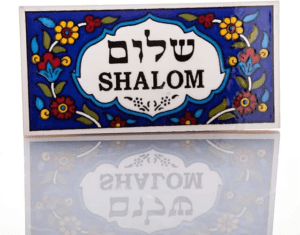
This is a common greeting in Hebrew. Upon meeting someone, you’d say “Shalom,” and they’d respond with the same. Many Hebrew speakers say, “Shalom Aleichem” (peace be with you) instead. On the Sabbath, we wish each other “Shabbat shalom” (Peaceful Sabbath).
The word shalom is often translated simply as peace. While this is partly what shalom means, it only partially conveys its meaning. The concept of shalom goes deeper than that and brings us to realize the perfection in our holy God!
Shalom is a noun with many meanings. Its definition includes completeness, soundness, and welfare, along with harmony, prosperity, and tranquility. We’re left without an English word to convey all these, but searching the Bible for the word shalom can illuminate its more profound significance. Believe it or not, understanding shalom can help us better understand our God’s character!
A Name for God
Shalom is part of one of the names for God in Judges 6:24. Having met God himself and seen firsthand His supernatural power, Gideon built an altar and named it “Jehovah Shalom” or “The LORD is peace” to let everyone know that our God is shalom. He is peace and wholeness, completeness and perfection, harmony and prosperity – all of it!
The Way Things Ought to Be
In his book, Not the Way it’s Supposed to Be, Cornelius Plantinga of Calvin Theological Seminary says the following about shalom:
“The webbing together of God, humans, and all creation in justice, fulfillment, and delight is what the Hebrew prophets call shalom. We call it peace, but it means far more than mere peace of mind or a cease-fire between enemies. In the Bible, shalom means universal flourishing, wholeness, and delight – a rich state of affairs in which natural needs are satisfied and natural gifts fruitfully employed, a state of affairs that inspires joyful wonder as its Creator and Savior opens doors and welcomes the creatures in whom he delights. Shalom, in other words, is the way things ought to be.”
CORNELIUS PLANTINGA
Jesus and Shalom
By examining the word shalom, we can also better know Jesus, our Messiah. Isaiah calls Jesus the “Prince of shalom” in verse 9:6. Of all the terms above that are used to define shalom, Jesus has those qualities and is the Prince of them!
We can also use other words from the same root word to better understand what Jesus is Prince of. “Whole,” “it was worth it,” “perfect,” “was paid for,” and “paid for in advance” are meanings of words that come from the same root as shalom. It’s no coincidence that those concepts are part of our story as well. The perfect Prince of Shalom found us worth it and paid for our sin, making us whole!
You already know this one. It’s a word we use in song and otherwise to praise God all the time! Hallelujah is made up of halal and Jah. Halal means “to praise,” “to shine,” “to be boastful,” “to act foolish,” and other similar terms. Jah or Yah is short for the name of God in the Bible, Yahweh. So, hallelujah is to praise God, make Him shine, boast in Him, or even go crazy worshiping Him!
Crazy Worship?!
Is that too much? Well, that depends. Are we just saying words when we praise God, or are we approaching the Creator of the universe to tell Him just how amazing we think He is? Those in heaven know more than we do about God’s awesomeness, and this is the word they use to worship Him!
“After these things I heard something like a loud voice of a great multitude in heaven, saying, ‘Hallelujah! Salvation and glory and power belong to our God…’ And a second time they said, ‘Hallelujah! …’ And the twenty-four elders and the four living creatures fell down and worshiped God who sits on the throne saying, ‘Amen. Hallelujah!’ …Then I heard something like the voice of a great multitude and like the sound of many waters and like the sound of mighty peals of thunder, saying, ‘Hallelujah! For the Lord our God, the Almighty, reigns.’”
I don’t know about you, but reading these verses always gives me chills. Sometimes, we subconsciously fit God into our itty-bitty human box and forget that He’s the most awesome supernatural God ever. Try to picture this scene. God, on His heavenly throne, in His holy throne room, surrounded by heavenly elders and frightening creatures, is being worshiped by them. All the glory is His. The awe of the scene and God Himself is not lost on them, and they burst out with nothing other than repeated hallelujahs!
The powerful meaning behind hallelujah in our hearts when we worship might show Him at least a tiny shred of the praise He’s worthy of. What could we possibly say? It’s one of the best words our mortal mouths can offer. Hallelujah!
3. Yeshua יֵשׁוּעַ(pronounced yeh-shoo-uh)
This word is often translated as “Joshua” in the Hebrew Old Testament. It’s also the name of Jesus, our Savior! So, wait. If his name is actually Yeshua, why do we call him Jesus? Where did that come from?
Why Do We Call Him Jesus?
Where Yeshua is found in the Hebrew Old Testament, it is translated into English as Joshua. It was a male name in Bible times, and there are a few different Joshuas or Yeshuas in the Bible. When translated from Greek to English in the New Testament, it underwent a couple of transitions and then became Jesus.
Many now argue that the name Jesus is incorrect and, therefore, should not be used, but we should be careful not to get sidetracked by this. Jesus lived in a multilingual area, and he would have also been. He probably taught and conversed in different languages as necessary. What’s important here and in Jesus’s teachings is to preserve the word’s meaning.
More Than Just a Name
Beyond being a name, the word Yeshua is used throughout the Hebrew scriptures, meaning “salvation.” It was derived from the Hebrew word yasha, which means “to deliver” or “to rescue.” There are many well-known examples of where it’s used in the Old Testament, but here are a couple of my favorites:
“The Lord is my strength and song,
And He has become my salvation [yeshua];
This is my God, and I will praise Him;
My father’s God, and I will extol Him.” Exodus 15:2
“He only is my rock and my salvation [yeshua],
My stronghold; I shall not be greatly shaken.” Psalm 62:2
Isn’t it wonderful that Jesus’s name was the very thing he would do for us? Others with this same name in the Bible were also saviors of some type. Joshua led the Israelites during a time of numerous victories while conquering the land of Canaan. Yeshua, the High Priest, was the first High Priest in the rebuilt Temple following its destruction by the Babylonians. Isn’t it amazing that this important High Priest, the bridge from the Israelites to God, shares a name with our High Priest (Heb. 4:14) and way to God (John 14:6)?
4. Chesedחֶסֶד(pronounced che-sed, with the “ch” sound coming from the throat, as in Bach)
Known for its difficulty translating into English, this word contains a “chet,” a letter with a sound called a guttural. Since we don’t have true gutturals in English, it can be difficult to say this word correctly. Go ahead and practice. Say “Bach” – like the composer. Say it out loud. Listen for the sound at the end of the word, then say it at the beginning of chesed.
Chesed’s Meaning
Now that we know how it sounds, what does it mean? It’s commonly translated as mercy, kindness, lovingkindness, and goodness. It’s often used to convey God’s love toward His people, but, somewhat like God, it is much more complex than our first impression shows. Here are some very different examples of chesed’s use in the Bible.
“Then the Lord passed by in front of him and proclaimed, ‘The Lord, the Lord God, compassionate and gracious, slow to anger, and abounding in lovingkindness [chesed] and truth; who keeps lovingkindness [chesed] for thousands, who forgives iniquity, transgression and sin; yet He will by no means leave the guilty unpunished, visiting the iniquity of fathers on the children and on the grandchildren to the third and fourth generations.'” Exodus 34:6-7
“If there is a man who takes his sister, his father’s daughter or his mother’s daughter, so that he sees her nakedness and she sees his nakedness, it is a disgrace [chesed]; and they shall be cut off in the sight of the sons of their people. He has uncovered his sister’s nakedness; he bears his guilt.” Leviticus 20:17
Which is it?
In the above verse from Exodus, chesed is commonly translated as “lovingkindness .” God declares chesed an attribute of Himself. But then, the very same word is used to describe incestuous behavior, translated into English as “disgrace.” The contexts of both verses suggest two meanings for the same word, but this is not so.
Chesed translated as lovingkindness, mercy, charity, or even disgrace, doesn’t do justice to its whole meaning. This complex word conveys instead an attitude or behavior that shows an overflow of zeal or a lack of boundaries. Chesed comes from the Hebrew root meaning “eager and ardent desire .” It can mean both God-sized lovingkindness and disgrace worthy of great punishment because it is not a specific action but the passion or motivation behind it.
God’s
Infinite Love
When God describes His love for us using the word chesed, He’s telling us that He has a boundless, overflowing love for us! Inside His love for us is His infinite grace, immeasurable love, inexhaustible forgiveness, and unlimited charity. And seriously, Guys? None of us deserve that. I don’t care how great you think you are. We’re nothing but selfish, disobedient specks in this universe. What an awesome God we have that He would extend His chesed to us!
5. Shema שְׁמַע (pronounced shuh-ma)
This word is the first one in The Shema, Deuteronomy 6:4-9, which is recited regularly by Orthodox Jews and by many Christians. It’s also the verse Jesus refers to when asked what the greatest commandment is.
“Hear [Shema], O Israel! The Lord is our God, the Lord is one! You shall love the Lord your God with all your heart and with all your soul and with all your might. These words, which I am commanding you today, shall be on your heart. You shall teach them diligently to your sons and shall talk of them when you sit in your house and when you walk by the way and when you lie down and when you rise up. You shall bind them as a sign on your hand and they shall be as frontals on your forehead. You shall write them on the doorposts of your house and on your gates.” Deuteronomy 6:4-9
To Hear?
Shema is generally translated as “hear .” But right now, I can hear birds singing out the window, my daughter’s TV show in the background, and the keystrokes on my laptop. If the word shema is used to call the attention of the people of Israel and is followed by informing them that their lives should be a walking testament to God Himself, the word “hear” doesn’t quite convey what’s being said. In addition to “hear,”shema is also translated elsewhere in the Old Testament as “report,” “fame,” “tidings, “loud,” and “speech.”
It Requires Action
If you take the word with its context, however, it means more than the culmination of these words. In Deuteronomy 6, Shema is a command to not only hear God’s words but to act on them. I think of it in the same way as when I tell my children to listen. I don’t only mean for them to stop what they’re doing and hear what I say. I mean for them to hear and internalize what I say so that they remember and obey it.
This meaning is the same as shema can have. We need to pay attention—always studying God’s Word and spending time in prayer with Him so we can hear His words in the first place. Then, we need to internalize what He says, not just read or hear it and forget it. We need to remember it and, when required, obey it and apply it to our lives.
6. Amen אָמֵן (pronounced ah-meyn)
I know, I know – everyone knows this one. But did you know that it was a Hebrew word? Also, look at the above pronunciation. We can argue all day whether or not it’s pronounced ah-men or ay-men or when to use either, but for those who want to be purists about it, it’s neither!
The Deeper Meaning
This Biblical Hebrew word is unique because its primary meaning has not been lost in translation and cultural differences. “So be it” is the usual translation for amen. Amen is used correctly when we use it to affirm something someone says or after a prayer. Its root is aman, meaning “to confirm or support .” A related word is amanah, which means truthfulness, confirmation, credence, or belief. By saying amen, we’re stating that we confirm what has been said, believe in it, and find it true.
We say it to conclude our prayers and signify when we pray in unison with other people. We also use it in song to affirm the words and the message of our worship. Some even yell it out in church when a pastor says something that resounds with them.
The Conclusion of God’s Word
Our entire Bible concludes with this word. The last verse in the Bible sums up the whole Word, then affirms this message of truth with the “so be it” we know so well:
“The grace of the Lord Jesus be with all. Amen.” Revelation 22:21
Amen is also translated as “truth,” as in the following verse.
“Because he who is blessed in the earth
Will be blessed by the God of truth [amen];
And he who swears in the earth
Will swear by the God of truth [amen];
Because the former troubles are forgotten,
And because they are hidden from My sight!” Isaiah 65:16
Each word “truth” in this verse comes from amen in Hebrew. It says twice here that God is the “God of amen,” so this is one of God’s attributes or characteristics. He is the God of truth but also of confirmation, faithfulness, support, and affirmation of that truth. How privileged are we to have someone like this as our God?!
7. Mashiach מָשִׁיחַ (pronounced ma-shee-ach)
This word can be translated as “messiah,” but more literally means “anointed one.” In most places in the Bible, the English is “anointed one .” Only two verses translate it as “Messiah .” When used to refer to Jesus as the Messiah, Yeshua HaMashiach is used. Yeshua HaMashiach means “Jesus the Messiah” or “Jesus the Anointed One.”
Why Anoint?
The process of anointing someone with oil served to set that individual apart for service to God. It was used in the Old Testament to appoint priests (Ex. 29:7) and to establish kings over God’s people. Saul and David were appointed in this way (1 Sam. 10:1 and 2 Sam. 16:12-13), and prophecy in the Old Testament speaks of Jesus as Mashiach, “anointed one.”
“So you are to know and discern that from the issuing of a decree to restore and rebuild Jerusalem until Messiah [Mashiach] the Prince there will be seven weeks and sixty-two weeks; it will be built again, with plaza and moat, even in times of distress.” Daniel 9:25
In this verse, Mashiach is usually translated as “Messiah” instead of “Anointed One,” but the Hebrew word is the same. Jesus is truly our Mashiach! He has been anointed by God, chosen, and appointed to be our king and high priest!
8. Davar דָּבָר (pronounced duh-var)
The most basic translation of davar is that it means “word .” It can also mean “speak,” “pronounce,” “formalize,” “thing,” or “establish .” Here are some examples of its use in the Old Testament.
“And the Lord spoke [davar] to Moses, saying, “Go, tell Pharaoh king of Egypt to let the sons of Israel go out of his land.” Exodus 6:10-11
“‘ Is anything [davar] too difficult for the Lord? At the appointed time I will return to you, at this time next year, and Sarah will have a son.'” Genesis 18:14
“Then behold, the word [davar] of the Lord came to him…” Genesis 15:4
Although davar is translated as three different English words in the verses above, it means all of them. The context of each is used to derive the word’s meaning in each situation in which it’s used so that the essence of the scripture is not lost.
Its Use in the New Testament
But things get exciting when davar is translated from Hebrew into Greek in the New Testament. This word is translated into two different Greek words: logos, which refers to a written word, and rhema, which refers to the utterance or the thing that was said.
Jesus, Our Written Word
At the beginning of the book of John, Jesus is referred to as “the Word .” Logos is the Greek word used here, so we can conclude that Jesus is a type of written word. He was here on earth in a physical form and could be “read” as people could watch him and listen to him teach about God and himself. Some of these people recorded the events of his life on earth so we, too, can “read” him.
“In the beginning was the Word [Logos], and the Word [Logos] was with God, and the Word [Logos] was God.” John 1:1
The Power of God’s Word
Later in the New Testament, Hebrews 11:3 tells us that God’s word created something out of nothing.
“By faith we understand that the worlds were prepared by the word [rhema] of God, so that what is seen was not made out of things which are visible.” Hebrews 11:3
In this verse, the Greek rhema is used in place of “davar,” which is translated into English as “word .” But the implication of this verse is to show us just what kind of power there is in God’s spoken words! God spoke davar into nothingness and created order, an entire universe, and even us!
Davar teaches us that we can “read” Jesus, our “written” Word. He has been there all along, from before creation, but came to earth so we could learn from him and rescue ourselves from certain destruction. It also shows the power of God’s very utterances. He’s so awesome that things that previously didn’t exist spring into existence, just at His word!
It’s unsurprising when these two concepts come together further into the New Testament. 1 Corinthians 1:23-24 calls Jesus “the power and the wisdom of God .” The Word, God’s davar, IS His very power and wisdom! Our Savior is the magnificent power and the infinite wisdom of God!
9. Ra’ רַע (pronounced rah)
There are many different words for sin in the Bible, but ra’ is used more than 600 times! It comes from another Hebrew word, ra’a, meaning evil or bad. When you remove the “a” sound at the end, its meaning encompasses “evil,” “harm,” “displeasure,” or “misery,” but it also conveys an aspect of brokenness. It can mean “broken into pieces,” like when something’s completely ruined, or “blemished,” like things unfit for presentation to God, such as for sacrifice.
Use in Scripture
The ugly, gaunt cows from Pharaoh’s dream in Genesis 41 are described using this word, as is the wild beast that Joseph’s brothers claimed devoured him in Genesis 37. It’s also translated into “evil” in describing the tree in the Garden of Eden. It was the Tree of the Knowledge of Good and Ra’.
Brokenness
While we know that sin is disobedience to God, without the aspect of brokenness, we have no reason to turn to our Savior. Everyone knows there’s sin in their life, but not everyone realizes their brokenness in it. We all know someone who says, “Sure, I’ve done bad things, but I’m a good person overall.” They imply that sin is just part of who we are, but God will compare us to one another and forgive the good people for being less evil than the really evil ones.
It sounds great, but that’s just not how it works. The Bible says that we ALL have fallen short of God’s glory (Rom. 3:23). He’s just too glorious, too perfect, and too holy for us – even the good ones – to ever measure up to Him. HE is what we’ll be compared to in judgment, so we all need Jesus, the only person to have kept all of the Law perfectly, as our substitute.
Without realizing that the ra’ in our hearts has left us blemished, unacceptable, and broken before God, we cannot see our need to accept the gift of Jesus. When we get to the point of being devastated by our ra’, we can then humbly approach God, genuinely repentant, and be made unblemished, acceptable, and perfect in the eyes of our Creator, fit for communion with Him!
These are just a few Hebrew words that can enrich our faith by understanding them in their original form. Imagine what can come to light while learning even more of the Hebrew language! As lifelong students of the Bible, learning its primary original language will deepen our faith and our relationship with the God of the universe!
This post contains affiliate links. I only advertise items I personally recommend and may receive a small commission from qualifying purchases. For more information, visit our Affiliate Information Page.
As many Christians grow in their faith, they begin to pursue the Biblical roots of their faith. They incorporate the Biblical Holy Days, the study of the Hebrew language, and maybe even some Jewish traditions into the practice of their Christian faith.
But how specifically is this different from traditional Christianity? We’ll get to that in a minute. First, let’s look at one way we’re the same to avoid confusion.
Salvation by Grace
Just as traditional Christianity holds to the doctrine of grace (Romans 11:6; Ephesians 2:8–9, and more), so do Hebraic Believers. Unfortunately, this is the biggest misunderstanding and most common objection to the Hebraic faith from their Christian brothers and sisters. Many assume that we’ve shifted from the belief that we’re saved through the sacrifice of Jesus to the belief that we’re saved instead by adherence to the Law. This isn’t true.
Sadly, in some cases, this misunderstanding has led to a wide divide between traditional Christianity and Christians who practice in the ways of their Biblical roots. Instead of being a divider, the concept of grace should be one thing that unites these two faiths!
Where We Differ
Although we have many similarities and agree on many of the concepts in the Bible, the main thing we differ on is how to live out our faith.
Applying the commands in the Torah to the life of a Christian is by far the most common objection traditional Christians have with our faith. You may be surprised to hear, though, that most Christians already observe much of the Law. The 10 Commandments (Ex. 20), the ideal setup for marriage (Gen. 2:24), and the command to love your neighbor (Lev. 19:8) are all parts of the Law. The difference is that we observe a few more of the laws found in the Old Testament than traditional Christians do.
But because we make an effort to follow the Law doesn’t mean we think that’s what saves us. I’ve heard countless Christian arguments of this sort, and this is a result of a misunderstanding of what Hebraic Christians believe.
The main objection is that we teach against grace. They incorrectly assume that, because we teach that Believers should observe the Law, we consider it to be what saves, instead of the blood of Jesus. I’ve heard it said that we even “preach a gospel contrary to what Paul preached” (Gal. 1:8-9).
But what they don’t understand is that we don’t believe that at all. We do not believe or preach that we’re not saved by grace. As a part of multiple communities in the Hebraic and Messianic Christian faiths, I will tell you that I’ve never heard from someone who believes we’re not under grace. I haven’t heard from any group or individual in this faith that has replaced grace with the Law.
A lot of the disagreement comes from our differing interpretation of Pauline Scripture. If you’re interested in pursuing the Hebraic position vs. that of traditional Christianity on this, 119 Ministries has an in depth video series explanation as well as a short book and blog post, all entitled “The Pauline Paradox”.
In the quest to get back to our Biblical roots, many choose to learn Biblical Hebrew. There are many benefits to learning Hebrew but the most common is to bring clarity when studying the Bible.
While only some traditional Christians choose to learn Hebrew, most Hebraic Believers are at some level of knowledge of Hebrew. Some just know basic greetings or names of people and places in the Bible and some are full-blown Hebraists!
Church Replaces Israel
Most Hebraic Believers don’t believe in what’s known as Replacement Theology. This is the concept that the Christian church has replaced the nation (or people) of Israel. Replacement Theology says that the Jewish people are no longer God’s people because the Christian church has taken that place. This idea is not only antisemitic, it’s anti-Biblical!
We believe instead that we’re grafted in to the promises God gave to Israel. We’re adopted into this family of God’s people through our faith in the Messiah but we don’t replace the natural-born children of that family. For more on the relationship between the church and Israel, read Wild Olive Branches: The Blessing of Being Grafted In.
Christians Don’t Become Jews
Another problem Christians see with Hebraic Believers is that they think we’re trying to become Jewish. They argue that one cannot just follow the Law and observe the Holy Days and then be changed into a Jew in the same way you can become Baptist by becoming a member of a Baptist church.
They’re correct. We do not become Jews. This is just another misunderstanding I’ve heard often about Hebraic Believers. We do not believe we are changing into Jews by practicing our faith this way. Our goal is to practice our faith in the way God wants us to. We base these practices on what we find in the Bible and we incorporate some valuable Jewish traditions as we see their relevance to our faith Biblically.
Acceptance of Jewish Traditions
While we’re on the subject of Jewish traditions, this is another objection Christians have to the Hebraic faith. Some say we shouldn’t have practices common to the Jewish people, as we’re not Jewish.
I have two responses to this. First, we follow a Jewish rabbi. Jesus did Jewish things, not just because he just happened to be born into a Jewish family but because that was the faith he was bringing others into. If you struggle with the idea of our Savior being Jewish, I encourage you to think and pray about this: When Jesus returns, will he be Jewish? Did he come to earth to start a new religion? Jesus’s Biblical Jewishness isn’t something he renounced and we shouldn’t either.
Second, many Jewish traditions are deeply rich in the ways they highlight aspects of our faith. Hanukkah is a celebration of God’s faithfulness to His people, as is Purim. Bar Mitzvahs are an important transition where our youth takes responsibility for their own faith. Lighting candles on Shabbat (the Sabbath) helps us fulfill the command to remember the Sabbath and sets it apart from the other days of the week.
These and other Jewish traditions bring our focus back to God and His Word in a way traditional Christianity does not. We learn from them and there are even some Jewish organizations, such as The Chabad, Rabbi Lapin, and Dennis Prager, that direct their ministries partly toward including Christians in their faith.
Different Bible Versions
Christians of all kinds have preferences to certain versions of the Bible. It’s wonderful to live in a time, where we not only have access to God’s Word, we can even choose our favorite way to study it because we have so many resources available to us!
Hebraic Believers tend to prefer more literal Bible translations. We also attempt to replace some of the “Jewishness” and ancient Middle Eastern culture that has been removed from some traditional translations.
My intent in writing this post is to clarify these differences for those seeking answers in this area. Although we do have differences, believers in Christ from all backgrounds are parts of the same body, and we should function as such:
For through the grace given to me I say to everyone among you not to think more highly of himself than he ought to think; but to think so as to have sound judgment, as God has allotted to each a measure of faith. For just as we have many members in one body and all the members do not have the same function, so we, who are many, are one body in Christ, and individually members one of another.
This post contains affiliate links. I only advertise items I personally recommend and may receive a small commission from qualifying purchases. For more information, visit our Affiliate Information Page.
Like most of you, before a holiday, I always plan activities, crafts, special meals, etc. Hanukkah’s no exception. Traditions are wonderful for teaching and bringing everyone together but they do take more time and effort, which can be difficult during a time when more our schedules are full.
I used this recipe for our Hanukkah latkes one year when finding the time to shred potatoes and make latkes from scratch seemed overwhelming. But my family loved it so much that it’s become the one we use every year! No judgement to those of you making your latkes the old fashioned way but here’s a recipe for those of us who welcome a shortcut!
This recipe feeds a crowd! It makes about 30-ish medium latkes. I have a crowd to feed at my house but you’ll have to cut this recipe down if you have only a few people.
I’ve heard these can be made in the air fryer too. If you try it, let me know in the comments how they come out!
Bonus: Here’s a hilarious song to listen to while you cook your latkes!
30 c shredded potatoes (3 30 oz bags shredded hash brown potatoes)
2-1/2 c diced onions
2 c (or so) oil
Directions
Mix all ingredients well except the oil.
Shape into pancakes 1/2 to 3/4 inch thick and 6 inches diameter (that’s about 2 cm thick and 15 cm diameter for you scientific types or those outside the US 🙂 ).
Fry in about 1 inch of oil until crispy.
Place on a paper-towel lined plate and serve with applesauce or sour cream.
This post contains affiliate links. I only advertise items I personally recommend and may receive a small commission from qualifying purchases. For more information, visit our Affiliate Information Page.
You may have heard that many Christians celebrate Hanukkah. Although it’s most commonly known as a Jewish holiday, Hanukkah is relevant to the Christian faith. Aside from Jesus himself celebrating Hanukkah in the bible (John 10:22-23), the themes and story behind Hanukkah are reasons for every Christian to celebrate – the power and faithfulness of our God. As grafted in children of God, we can embrace this holiday as part of our history and tradition, just as Jesus did.
History
The Jewish people were under Syrian Hellenistic rule between the Old and New Testaments, around 165 BC. Antiochus IV was the leader of the Seleucid Empire at the time. Under his control, Jewish traditions were outlawed, including Sabbath keeping, adherence to a Kosher diet, and circumcision. Idols were set up in the Temple, and pigs were rumored to have been sacrificed on the Temple altar. Among the punishments for observance of Jewish traditions were death and torture.
Rather than face brutal punishment, many Jews assimilated with Hellenistic culture. Some evaded their Syrian leaders by hiding in the hills and caves of Judea. A small number of Jews led by Judah Maccabee decided to revolt. Despite the overwhelming opposition, they courageously stood up for their God, His Word, and His Temple. They were miraculously victorious despite being vastly outnumbered!
After the battles, the Jewish people removed the idols from the Temple and put the menorah back in place. But when they went to light the menorah, only one day’s worth of oil was left, and making more was an 8-day process. The story goes that one day’s worth of oil continued to burn for eight days until new oil was ready for use, another Hanukkah miracle.
History vs. Tradition
The story of the Maccabean revolt is found in the books of the Maccabees. These writings are not included in the Protestant bible, but the writings of the historian Josephus support the oppression of the Jewish people and the outcome of the revolt.
The traditional part of the story is the part about the oil. This story isn’t recorded in the books of the Maccabees or other historical sources but in the Talmud (Shabbat 21b), the written form of the Oral Torah. It’s been passed down by Jewish people for thousands of years and is the miracle that’s the focus of the celebration of Hanukkah.
Jesus and Hanukkah
We find Jesus at the Temple during the celebration of Hanukkah, or the Feast of Dedication, in the book of John, verses 10:22-23. Many people traveled to the Temple in Jerusalem during Hanukkah, as with many biblical holidays. Jesus is also shown visiting the Temple and walking through Solomon’s portico during the festival of Hanukkah in the Book of John.
At this time, Jews gathered around him and asked him to tell them if he was the Messiah. He replied that he already had, as well as performed works in God’s name but that they didn’t believe him. They were expecting the Messiah to save them from Roman rule, but Jesus said he was there to offer them eternal life instead. He said that he and God are one, and they attempted to stone him because they didn’t believe his claim and thought him blasphemous. Nonetheless, it was during Hanukkah that he chose to reveal his deity.
Why Some Christians Celebrate
Usually, the Christians that celebrate Hanukkah are either in a household of mixed faith (Jewish and Christian) or lean toward the beliefs of the Hebrew Roots Movement. Here are a few different reasons for Christian Hanukkah observation.
Alternative to Christmas
Some Christians have an issue celebrating Christmas as a Holy day for God because there is no mention of it in the bible. Moreover, the pagan roots and traditions woven throughout the Christmas holiday call into question whether the followers of God should be engaging in the holiday. More and more Christians are finding biblical meaning in celebrating Jesus’s coming to Earth by celebrating Sukkot or Hanukkah instead.
Many feel that Jesus’s Jewish culture and appearance at the Temple during Hanukkah show that he celebrated Hanukkah himself. They also see his declaration that he and God are one during Hanukkah as a sign that we are to re-dedicate ourselves to God through him.
To celebrate a historical event where God’s
Glory was shown
Although we can (and should!) celebrate God’s Glory and faithfulness every day, Hanukkah celebrates a time when His Glory was shown, and His promise kept in a specific and miraculous way.
To celebrate a victory of God’s people
When God seeks to accomplish what we see as impossible, He can and will do just that. During Hanukkah, He showed He brought victory to His people as they were outnumbered and stood against a powerful, experienced army. God’s power is a theme throughout the bible as God’s miracles point to Him and His omnipotence because they occur under circumstances that would otherwise make them impossible. This theme also runs through the book of Esther, which is what the celebration of Purim is about.
To celebrate the re-dedication of themselves
(temples) upon indwelling of the Holy Spirit
Paul tells us that our bodies are temples of the Holy Spirit. When we accept Jesus as our savior, his blood cleanses us of our sin, and we re-dedicate our lives to following him. His Spirit can then live in us, the purified and re-dedicated temples.
Common Hanukkah Traditions
Lighting of the Hanukkiah
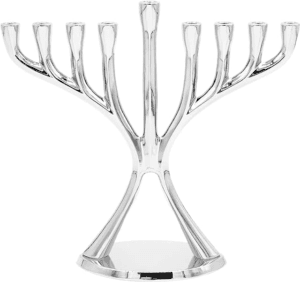
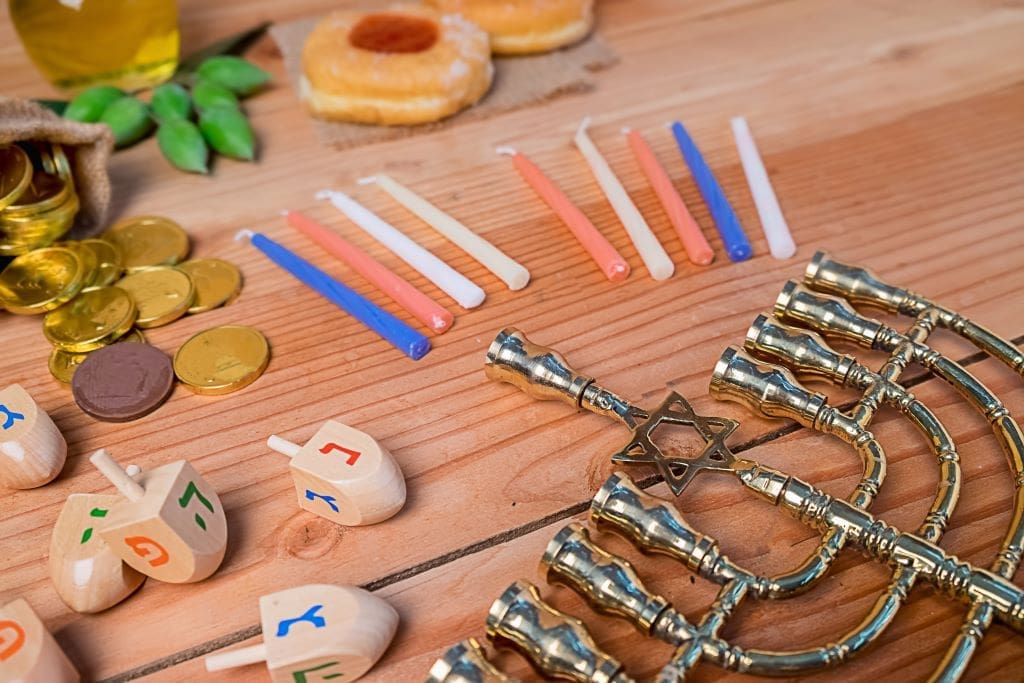
The menorah used during the celebration of Hanukkah isn’t the same as the one used in the Temple, which has seven branches. For Hanukkah, the menorah used is called a Hanukkiah and has nine branches, with eight candles, one for each night of Hanukkah, and one candle to light the others, called the Shamash.
Foods
Traditional foods served during Hanukkah are those cooked in oil. Potato pancakes called latkes, and a type of jelly doughnut called sufganiyot are two popular Hanukkah dishes.
Gift-giving is a primarily American Hanukkah tradition, probably due to the Hanukkah and Christmas seasons often overlapping. While some families give gifts during Hanukkah, this practice has no biblical or historical tradition. Many families give one gift for each night of Hanukkah, and some hide them as a challenge to the recipients.
The Dreidel Game
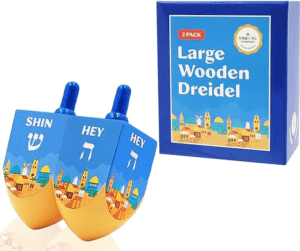
Although it’s been around for centuries, this game is so much fun! I’ve heard a few theories about why and how this game started, but it most likely has little historical significance. It’s a simple game, but kids and adults can get into it despite its simplicity! You’ll need a dreidel and something to use as tokens or chips to play. Many people use chocolate coins (gelt), but our family has used everything from pennies to M&Ms.
Here’s how to play: Give each player 10-15 coins or whatever you use as tokens. Each player puts one coin into the middle, the “pot.” Each player takes a turn spinning the dreidel. Whichever side is face-up when the dreidel stops will determine whether the player that spun it puts coins into or takes coins from the pot. Gimmel (ג): Take all of the coins in the pot. Hey (ה): Take 1/2 of the coins in the pot. If there’s an odd number of coins, take 1/2 plus 1. Shin (שׁ): Put one coin into the pot. Rolling a shin sometimes prompts the rhyme “Shin, shin, put one in!” from the other players. Nun (נ) The player gets nothing, and the turn goes to the next player. If you run out of coins, you’re out. The winner is the one with all the coins at the end of the game.
I know dedicated Christians on both sides of this conversation. Most don’t celebrate Hanukkah, but some do and say that it’s a tradition that enriches their Christian faith. If you’re wondering if you should celebrate it, the first step should be to pray. Ask God any time you add or dispose of traditions that relate to your faith and how He would like for you to go about doing that. Whether your traditions are Godly or worldly or motivated by your desire to give glory to Him or yourself will be reflected in those traditions, so choose carefully and prayerfully which and how you take part.
Whether you celebrate Hanukkah or not, make sure the main themes of Hanukkah are evident in your faith and your life. God keeps His promises by protecting His people, and His ability and willingness to show His power through miracles should cause us to give all praise and glory to Him!
This post contains affiliate links. I only advertise items I personally recommend and may receive a small commission from qualifying purchases. For more information, visit our Affiliate Information Page.
After realizing the value of learning the Hebraic Roots of the Christian faith, there is no clear path to follow, leaving many people feeling stuck, not knowing how to proceed. Although they know that many Jewish traditions like Passover, for example, point to Jesus and enrich the Gospel, there’s no specific source on how to implement those in a modern American Christian family. Searching the internet may help, but it may also be confusing due to conflicting viewpoints inside and outside the Hebrew Roots Movement.
In Acts, there was an ongoing debate about whether Gentiles could participate in the faith of the early Messianic Jews without following all details of the Torah. James the Apostle replies, “Therefore, I judge you not to trouble those from among the Gentiles who are turning to God…” (Acts 15:19-20). James knew, and I’m assuming God knows, that learning Jewish traditions as a Gentile takes some time and grace. Although Christians have already “turned to God,” we may be just beginning to incorporate Biblical practices into our faith. Our family has had to find resources and learn a lot independently, and there has been a steep learning curve. If you give time and grace to yourself and your family in this endeavor and combine them with your conviction about learning these practices, you’ll eventually figure it out. It has been a long process for my family and me, but we’ve grown so much, and it’s been so worth it!
Start with the Sabbath (Shabbat)
The best place to start is by incorporating the practice of a weekly Sabbath. Observing the Sabbath is where my family started, but I have other reasons for it being a good starting point.
It’s one of the 10 commandments (Ex. 20:8 and others).
It happens weekly, allowing for a lot of practice.
Your practice of it can vary.
Many Jews revere it as the most holy day.
It can bring peace to your home.
It will bring rest.
It is a sign of the covenant between God and His people (Ex. 31:16, Lev. 24:8, and others).
Soon after you attempt to start keeping the Sabbath, you’ll realize that the rest of your week must change to accommodate a workless Sabbath. Friday will turn into Preparation Day, and the chores from Friday and Saturday must be spread out throughout the week. It may be helpful at this point to make or revise your cleaning schedule. A word of caution, though – be careful you don’t ruin your Sabbath by sliding into it exhausted, resentful, and arguing with your family due to your stressing to get everything done. Unfortunately, I’ve done it many times, and it will disrupt the peace the Sabbath is supposed to bring. Keep preparations simple at first, focused on allowing for rest, togetherness, and time with God. Here are some things to start with.
Compile some family favorite recipes that are easy to make or can be made ahead of time and use those for Friday and Saturday evenings.
Make or plan meals with little prep (like veggies and dip or sandwiches) for Saturday lunches. Here’s the hummus recipe we use regularly.
Make sure the house is clean enough for everyone to be able to relax (kitchen, bathrooms, and main living areas functionally clean).
Lay out clothing for Shabbat on Friday.
Find resources
I’m so glad you’re reading this! When I started my Hebraic faith journey, resources for Christians were minimal. I had to wade through Jewish sources, deciphering what applied to me and what didn’t. While I won’t claim to have all the answers, I will share what I’ve learned to make this path easier for other Believers to travel. Many other resources are out there now, most of which weren’t available even a few years ago. Here are some of my favorites, and there are even more on my resources page:
Websites
Hebrew for Christians – While the focus is to teach Hebrew, they also cover holidays, prayers, and more.
119 Ministries – Videos and podcasts that provide Biblical answers to many of our questions on our journey.
Torah Class – The BEST bible study I’ve found that’s from a Hebraic perspective. This study is intense, not directed toward seekers but mature Christians familiar with the Bible. The site has many studies covering the Old and New Testaments and topics, all of which are free!
Land of Honey – Many additional resources for Christians seeking Hebraic information – holidays, printables, etc.
Aish.com – Educational website about Judaism – holidays, Torah, Jewish wisdom, etc.
It’s easier to navigate this new beginning with a community. Chances are getting better that there’s one near you. Even if there’s not, it’s worth the drive! Find one here.
I know visiting a new church or synagogue can be intimidating, especially of a different faith than you’re used to! In my experience, Messianic Jewish congregations are open to Christians joining them and welcome them with open arms. If you have any questions or are hesitant to visit one in your area, call first and inquire. I’m willing to bet they’d love to have you show up!
Study the Torah
Studying the Bible from the point of view that the Torah (the first five books) is the root of all Scripture can deepen your knowledge of the Bible in its entirety! If you’re not sure where to start, print out and follow my printable Torah reading schedule. It will have a reading from the Torah and a corresponding reading from the New Testament. When I started studying the Bible this way, it significantly improved my understanding of the whole Bible, and I think it will do the same for you.
Learn Some Hebrew
It’s not just one more thing to add to our already full to-do list! Learning the Biblical Hebrew language or having a good grasp on the most-used Hebrew words in the Old Testament can significantly increase your understanding of the culture of the Hebrew people (Jesus’s!), both the Old and New Testaments, and even God Himself.
Although translated by some very educated and gifted individuals, there’s no substitute for the Bible in its original languages. Hebrew doesn’t translate well to English, leaving room for some misunderstanding. One of our lifelong pursuits as Christians is to study the words of our God. Given this, what could stop us from increasing our understanding of the Bible by learning the original language of its writing? Get started! I bet it won’t be as challenging as you think!
Stay in the Word
Always. But especially while you’re on this path that is new to you. As you research and come across resources to help you, use discernment. Compare what you hear to what the Bible says and pray for clarification when necessary. Many Christians of all denominations have gradually and unknowingly strayed from following God through His word to following a pastor, author, or another person instead. This journey is between you and your family and God. Please make sure it brings glory to Him and no one else.
This post contains affiliate links. I only advertise items I personally recommend and may receive a small commission from qualifying purchases. For more information, visit our Affiliate Information Page.
When you really want to delve into your studies of the Bible, a knowledge of its original languages is indispensable! Aside from the obvious biblical advantages, there are other benefits to a Believer’s faith when learning Hebrew.
If you’re just starting out, welcome! I encourage you to first become familiar with the Hebrew alphabet, as well as the vowels as a starting point.
The Hebrew language is written from right to left. This may be difficult to get used to but you can train your brain to immediately recognize this in no time! Because of this, books written in Hebrew will be opposite of those in English, with the spine on the right instead of the left and they’ll open toward the right instead of the left as well.
A Hebrew word is read by saying the consonant first, then the vowel that accompanies it, then the next consonant, and so on. You can easily sound the words out, similar to the Phonics method of learning to read English.
Note on pronunciation: I use the letters “ch” to indicate not the English “ch” sound as in “chew” but the Hebrew guttural sound as in the name “Bach”.
אָב (father)
This word means “father” and is pronounced “ahv”. אַבָּא, pronounced abbah, is a more familiar term for “father”, similar to the use of “dad” in English.
נַעַר (young man)
The word for “young man” is pronounced “nah-ar”. Related to this is the word for “young woman”, נַעֲרָה, pronounced “nah-ah-rah”.
אַבְרָהָם (Abraham)
One of the most significant names in the Bible, Abraham, is pronounced “av-rah-hahm”.
דַּוִד (David)
Another of the people we know in the Bible, David, is pronounced “dah-veed”.
שַׁמָע (hear)
Pronounced “sha-mah”, this is the word for “to hear” or “he heard”. Conjugation of Hebrew verbs is gender-dependent, so “she heard” would be שָׁמְעָה, pronounced “sham-ah”. They heard, if you’re talking about a group of males, would be שָׁמְעוּ, pronounced “sham-oo”.
Nouns have masculine or feminine gender in Hebrew. For example, the word for table, שֻׁלְחָן (“shul-chan”) is masculine, while the word for family, מִשְׁפָחָה (“meesh-pa-chah”) is feminine.
“Hoo” is how you pronounce the word for “it” (הוּא above) when you’re describing a masculine noun. For feminine nouns, הִיא pronounced “hee”, is used. So, “he” is “she” and “who” is “he”. That’s how my children remember it!
מִצְוָה (commandment)
Pronounced “meetz-vah”, this is the word for “commandment”. A mitzvah can also be a good deed or act of obedience to God’s Law. Plural, mitzvah would become mitzvot (מִצְוֺת).
יְרוּשָׁלַםִ (Jerusalem)
Jerusalem is pronounced “yuh-roo-sha-la-eeem”. This is one case where a vowel sound precedes a letter it’s under. The chiriq under the final mem at the end of the word is said before the mem, making the sound “eem” rather than “mee”.
Another case where the vowel sound precedes its letter is when Chet is found at the end of a word and accompanied by the vowel patach (חַ). In this case, instead of being pronounced “cha”, it’s pronounced “ach”. An example is the word רוּחַ, which means “spirit”. It’s pronounced “roo-ach”.
מִצְרַיִם (Eqypt)
Here’s another familiar place in the Bible. Meaning “Egypt”, Mitzrayim is pronounced “meetz-ra-yeem”.
בְּהֵמָה (animal)
Pronounced “buh-hey-mah”, this is the Hebrew word for “animal”. It can also mean “cattle”. Plural, בְּהֵמָה would be בְּהֵמוֹת, pronounced “buh-hey-moat”.
זַכַר (to remember)
This verb means “to remember” or “he remembered”. It’s pronounced “za-char” and is conjugated depending on the subject. “She remembered” would be זָכְרָה, pronounced “zach-rah” and “they remembered” would be זָכְרוּ, pronounced “zach-roo”.
לִפְנֵי (before)
Pronounced “leef-nay”, this is the word for “before” as in “he appeared before the king”.
עַמַד (to stand)
Here’s another verb. This one means “to stand” and is pronounced “ah-mahd”. It’s conjugation is similar to other Hebrew verbs, so “she stood” would be עָמְדָה (“am-dah”) and “they stood” would be עָמְדוּ (“ahm-doo”).
עִיר (city)
“City” in Hebrew is pronounced “eer”. “Cities” would then be עָרִים, pronounced “ah-reem”.
עֶבֶד (servant)
“Eh-ved” is the word for “servant” or “slave”. Plural, it’s עֲבָדִים, pronounced “ah-vah-deem”.
אָח (brother)
The word for “brother” is pronounced “ach”. Plural, it’s אַחִים (“ach-eem”) and the word for “sister” is אָחוֹת and is pronounced “ach-oat”.
“Le-chem” means “bread”. As Christians, we’re familiar with the name of the place of Jesus’s birth, Bethlehem. Bethlehem is a Hebrew word (בֵּית לֶחֶם), meaning “house of bread” or “beit-le-chem” (more commonly pronounced “beth-le-chem”).
מַיִם (water)
“Water” in Hebrew is pronounced “mah-yeem”. The ending of the word mayim indicates that it’s plural, so it’s more literally translated “waters”, such as in Genesis 1, when God’s Spirit hovered over the waters.
לֵב (heart)
The word for “heart” is pronounced “layve”. It can also appear as לֵבָב, which would be pronounced “lay-vave”.