Author: Holy Branches

I’m a Gentile Believer, a devoted mother of five wonderful children, and the wife of an amazing husband. Nature, gardening, and dance bring joy and inspiration to my life. In my spare time, I play the piano, care for my garden, or study the Bible in Hebrew. And I’ll drop just about anything for a game of cards. My unwavering quest for a genuine relationship with the God of the Bible has driven me to delve deeply into His Word, which guides my journey and shapes my life's path. This exploration, combined with dedication to living out my faith, is at the heart of my writing. I seek to share my insights and discoveries with readers, encouraging them to embark on their own spiritual journeys.

Benefits of the Hebrew Roots Perspective

This post contains affiliate links. I only advertise items I personally recommend and may receive a small commission from qualifying purchases. For more information, visit our Affiliate Information Page.

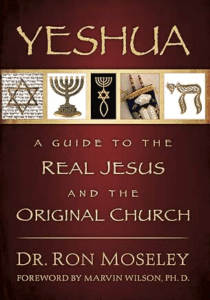
Yeshua: A Guide to the Real Jesus and the Original Church

As my family and I have grown in our Christian faith and embraced the Hebrew Roots of that faith, I’ve found so many benefits along our journey! It’s put to rest some of the inconsistencies that have bothered me about the Christian faith as well as given me a better understanding of the Scriptures, our Savior, and of God! Here are the main benefits I’ve noticed of this perspective on my faith.

1. It clarifies the continuity between the Old and New Testaments. 

Many regard the Old and New Testaments to be separate books, with separate stories, maybe even with different Gods. Although most Christians will say they believe Bible to be the inspired word of God in its entirety, some even go so far as to consider the Old Testament irrelevant to our faith. I used to embrace this belief and it led to colossal misunderstandings of God, Jesus, salvation, the Bible, and many other concepts.

The truth is that the whole Bible is one story of one God and His people. There is no “God of the Old Testament” as I have heard Him described. God is the same as He was then and we can expect Him to be the same in the future.

When the Bible tells of God’s people in the Old Testament, it also refers to us as Believers because we’re grafted in to the promises of God through our faith in Jesus.

Both Testaments are not only relevant to our faith, they each contain concepts that we must apply to our lives as Believers in Christ. While most of us can see the relevance of the New Testament clearly, some see the Old Testament as difficult to understand, outdated, and harsh.

But without a solid understanding of the Old Testament, we cannot fully understand the New. It was in the Old Testament that the roots were laid – for the Messiah, Israel (both the people and the land), for the church, and for the future.

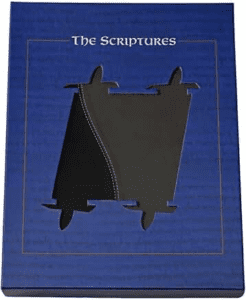
The complete story can’t be found in the New Testament alone and interpreting the Old Testament in light of the New is backward and will lead to much confusion and misinterpretation. I have very recently found a simple way to understand the strong connection between the two Testaments in the version of the Bible called The Scriptures. It puts in bold the parts of the New Testament that are directly from the Old Testament and there’s a LOT of bold!

2. Jesus’s words are easier to understand. 

While it may be difficult for some Christians to get their heads around (it was for me at first!), Jesus is very, very Jewish. The thought that once blew my mind is that he’ll STILL be Jewish when he returns!

With that in mind, how can we interpret what Jesus says from the mindset of American culture? For example, when Jesus is asked what the most important commandment is, his response includes the words of the Shema, Deuteronomy 6:4-9, which is recited at least twice daily by Orthodox Jews, both today and in Jesus’s time. His audience would have easily recognized his response as the familiar words of the Shema.

Jesus said that all of the rest of the Law and prophets (the Old Testament) hung on these words. With an understanding of the Shema and its prominent place in Jewish life, no one in his audience would have interpreted him as saying that these were now the only two laws that applied, as some believe today. They would have seen, as many do, that this verse shows us that loving God is following His commands – all of them!

3. Paul’s writings no longer seem to contradict one another. 

I’ve always found Paul’s letters, particularly when he writes about the Law, to be confusing. I’m not the only one. Even Peter notes in 2 Peter 3:3 that Paul’s writing is confusing to some. Here are two excerpts from Paul’s writings as an example:

Now that no one is justified by the Law before God is evident…

Galatians 3:11

And

…for it is not the hearers of the Law who are just before God, but the doers of the Law will be justified.

Romans 2:13

And Paul appears to not only have contradicted himself but to have contradicted Jesus as well! Jesus says that he didn’t come to abolish the Law (Matt. 5:17-19) and then Paul says that Jesus abolished the Law (Eph. 2:14-15).

The common Christian interpretation takes the position that the Law has been abolished and interprets these and other verses with that understanding. They hold Jesus’s words up to Paul’s and take the position that Jesus must have meant something else when he contradicted Paul. But when you take the words of Jesus and the rest of the Bible as the authority for interpretation of Paul’s words, a very different result is reached.

Even though his writings confuse many due to the different types of laws he refers to and his differing audiences, Paul believes (as do many Hebrew Roots Christians and Messianic Jews) that, while our adherence to the Law doesn’t save us, it is the code we should adhere to after salvation out of sanctification and growth in righteousness. I’ll say it again because this is the point where the Hebrew Roots Movement tends to lose a lot of Christians – following the Law does NOT save us. But it is the way we should live as God’s redeemed people.

4. God’s Laws can be seen as blessings instead of constraints. 

Biblically, God’s Laws are good but many see them instead as negative and as constraints put on the lives of those before us just to show us what sin is and that we can’t live up to what God desires of us. But that’s not what God says about them. Here are some verses that show us how God views His Laws for us (emphasis mine):

The law of the LORD is perfect, restoring the soul…

Psalm 19:7

How blessed is the man who does not walk in the counsel of the wicked, nor stand in the path of sinners, nor sit in the seat of scoffers! But his delight is in the law of the LORD, and in His law he meditates day and night.

Psalm 1:1-2

Oh that they had such a heart in them, that they would fear Me and keep all My commandments always, that it may be well with them and with their sons forever!

Deuteronomy 5:29

The entire chapter of Psalm 119 has wonderful things to say about God’s Law and so do many, many other places in the Bible! Although they don’t have the power to save us, God’s Laws are the best way to live as His people and they are a blessing to us!

5. God gets the glory. 

Reverence for God, His name, His Word, and His Law are all major themes when Christianity is practiced from a Hebrew Roots perspective.

Many have returned to using the tetragrammaton (יהוה or Yahweh, as it’s most commonly pronounced) to refer to God or even to not saying or writing a name for Him at all. This is done out of reverence as well as out of obedience to the third commandment. While some may see this as impersonal, it comes as a result of faith in and awe and reverent fear of the God of the universe.

As I stated in #1 above, the Hebrew Roots perspective gives equal weight to the Old and New Testaments. The Torah (the Bible’s first five books) and the words of the prophets are extensively referred to in the New Testament. In synagogues, these precious books of the Old Testament are studied and celebrated weekly! It glorifies God to take all of His words as applicable to our lives and our faith.

When His Word says that His Laws are “perfect” and that we should “delight” in them and many other positive things, we don’t glorify Him if we make them out to be negative constraints that God set up to trap us. We can rest in the trust that God gave His Laws because He knows what’s best for us as people belonging to Him.

6. Otherwise confusing cultural customs become clearly relevant. 

Take, for example, when the Holy Spirit was given to the Apostles. What they were celebrating when that happened was Shavuot. This is the time they celebrated God giving His Law to His people. With this background, they would’ve clearly understood the giving of the Holy Spirit as fulfillment of prophecy (Jere. 31:33). They would have seen that those same Laws they celebrated were the very ones being written on their hearts that day.

Celebrating Shavuot as a Christian puts the connection between the Law and the Holy Spirit in perspective. Rather than the Holy Spirit replacing the Law, it instead helps us be able to obey, since those Laws are now within us and have become a part of us.

7. Study of the Bible in its original languages brings clarity that no translation can.

Most Christians who have a Hebrew Roots perspective to their faith are at some level of learning the Hebrew and Greek languages to aid in their Bible studies. The Old Testament, written largely in Hebrew, cannot be fully understood from merely studying it in its translated form. Hebrew doesn’t translate seamlessly to English as there are some Hebrew words that cannot be fully expressed in our language.

I often use the well-known Hebrew word for peace as an example of this. In Hebrew, shalom is the word for peace.  Shalom doesn’t just mean peace though.  Its full Hebrew meaning encompasses completeness, welfare, prosperity, perfection, soundness, safety, health, and more.  Yet when translated into English almost everywhere it appears in the bible, in nearly every English bible translation, it is merely translated as “peace”, leaving the reader to interpret the meaning as simply that.

Learning Hebrew has great benefit to our Christian faith in that it aids our understanding of the Bible. Although there are great English translations of the Bible, none of them compare in accuracy to the original texts.

8. Jesus is celebrated year-round.

Celebrating the Biblical Holy Days, which all point to Jesus in some way, is a great benefit to our faith! Seven times a year (and on the Sabbath), we can look to these Days to remind us of Jesus – who he is, what he’s done for us, and what he will do in the future!

Here’s a summary of the Holy Days and their relevance to Jesus:

The Sabbath/Shabbat: Jesus is our Sabbath rest. Out of mercy, he covered our sin so we can escape the eternal punishment we deserve.

Pesach/Passover: Jesus is our Passover Lamb. His blood is what protects us from God’s just wrath.

Chag HaMatzot/Unleavened Bread: Being without sin, Jesus is the only “unleavened” one fit to take the place of sacrifice for our sin.

HaBikkurim/First Fruits: Jesus is our first fruits offering. Through him, we look forward to the future harvest, his resurrection, and to his eventual rule over the earth!

Shavuot/Pentecost: Jesus was the Word with us here on earth and left so that we could have the Spirit and the “Word” was then written on our hearts.

Yom Teruah/Rosh Hashanah: We look forward to the trumpet blasts that will occur when Jesus returns.

Yom Kippur/Day of Atonement: Because of Jesus, we can appear before God and commune with Him.

Sukkot/Feast of Tabernacles: Jesus came to earth and “tabernacled” with us.

9. Believing Jews and Christians can be one in Jesus.

Jesus didn’t come to earth to start a new religion. He came to be the sacrifice necessary to bridge the gap we created between us and God through sin. He came as the Messiah for Israel and we, as Gentile Christians, are grafted in to the promises God gave to His people Israel.

Christians and Jews weren’t meant to be separate but one body in Jesus. In communities of Hebrew Roots Christians and Messianic Jews, this complete body of Christ can be seen and experienced and it’s amazing to see them come together as one!

The Best Christian Passover Seder Videos

This post contains affiliate links. I only advertise items I personally recommend and may receive a small commission from qualifying purchases. For more information, visit our Affiliate Information Page.

I’ve heard from more Christians this year than ever before that they’re planning to celebrate Passover and hold their first Seder. How exciting that hearts are turning to Passover and its rich symbolism to remember and re-focus on God’s faithfulness and salvation of His people!

If you’ve never participated in a Seder before or are holding your own for the first time, it can be intimidating but there are many resources to guide you through it. For those in this position, I’ve found the following videos very helpful. For a simple written guide, see my post entitled A Very Basic Christian Passover Seder Guide.


Believers Passover Seder

by Tom Bradford from Seed of Abraham

I listed this video first because I truly think it will be the most helpful for Christian Passover first-timers. You could watch this video to learn about a Seder, prepare for one, or even use the video to lead you, your family, or church group through an actual Seder!

Seed of Abraham has excellent free Bible studies on various topics as well. I listen to them often and learn so much! Check them out at torahclass.com.


The Last Supper Passover

By Paul Wilbur at Wilbur Ministries

Paul Wilbur highlights the connections between the Last Supper and Passover as he and his family lead the viewer through a Passover Seder. Here’s the printable Passover Guide to accompany the video.


Broken for You: A Messianic Passover Seder Walk-Through

By Matthew Vander Els at Founded in Truth Ministries

This is a thorough video that should answer all your questions about a Christian Seder. They offer a free download of their Broken for You Haggadah to use during your Seder. I love how Founded in Truth Ministries conveys seemingly complicated Biblical concepts clearly and in a way that’s interesting to watch and listen to.


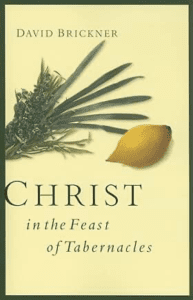
Christ in the Passover

By David Brickner from Jews for Jesus

Jews for Jesus is a Messianic Jewish ministry comprised of Jewish people that believe in Jesus as the Messiah. They

This is an entertaining video that explains both the traditions of Passover and how they point to the sovereignty of God as well as to Jesus and his sacrifice for us.

I truly hope you all have a blessed Passover!

Charoset Recipe

This post contains affiliate links. I only advertise items I personally recommend and may receive a small commission from qualifying purchases. For more information, visit our Affiliate Information Page.

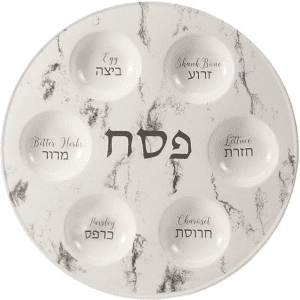
Charoset (pronounced by most Americans as “har-oh-set”) is one of the items on a Seder Plate during a traditional Passover Seder.  It is supposed to remind the Seder participants of the mortar between the bricks of the buildings the Israelite slaves built for their Egyptian captors.  It’s in stark contrast to horseradish, which is eaten at the same time as charoset during a Seder.  While horseradish is bold and shocking, charoset is sweet, mild, and pleasant.  

This can be made a day or two ahead of time, which can give a Seder host a welcome break on the day of the Seder itself.

Any type of apple you like will work for this recipe.  Gala are the most highly recommended and sweeter apples are preferred by most, but we usually use Granny Smith apples or a combination and it always turns out delicious!

Traditionally, a food processor is used, and the entire mixture ends up resembling the brick mortar from the Passover story.  It can then even be molded into a pyramid shape to serve it!  Many people simply chop the apples coarsely, giving the charoset a fruit salad type appearance.  How you make yours is up to you!    

Here’s how to hold a Basic Christian Passover Seder in case you need to brush up on that.

Ingredients:

  • 6 apples – peeled, cored, and chopped
  • 1 cup finely chopped walnuts
  • ½ teaspoon ground cinnamon
  • 1 teaspoon white sugar
  • 3 ½ teaspoon honey
  • 1/3 cup sweet red wine (I used grape juice when my children were small, and it was delicious also!)

Directions:

Place the apples and walnuts into a large bowl.  

Mix together the cinnamon and sugar and sprinkle the mixture over the apples.

Stir in the honey and sweet wine.

Serve immediately or refrigerate until serving.

(recipe adapted from Allrecipes.com)


Chicken Pasta Salad

One of the frequent regulars in our home, this is an easy and healthy meal that you can prepare ahead of time and mix just before you serve it.  For that reason, it’s a great choice for a lunch or dinner on Shabbat.  I often make the noodles and chicken and cut the veggies on Friday so that it’s ready to combine and serve before a meal on Shabbat. 

While it may be tempting to mix it ahead of time, don’t!  If kept overnight or even for a few hours in your fridge, the croutons will become mushy and the cheese slimy and very unappetizing! 

This dish is very flexible and we have varied it a lot over the years!  The type of pasta, cheese, vegetables, dressing, and more can be substituted with your favorites.  

The chicken can be whatever type you prefer – chicken breasts, rotisserie, thighs, or even canned chicken.  I marinate the chicken first sometimes for a more rich flavor.  I either cook it on the stove or in the Instant Pot.  Iceberg, romaine, leaf lettuce, or a mix of greens are all great options for the lettuce.

For the pasta, we commonly use spirals, but have also have used shells and tortellini with wonderful results.  The tomatoes can be any type – halved grape and cherry tomatoes are what we like best.  Cheddar, Mozzarella, and Parmesan cheeses work well in this recipe so use your favorite between those or use a mixture of all three!  Have fun with it!

Ingredients

3 cups of cooked chicken

4 cups shredded lettuce

12-16 ounces of pasta, cooked

1 can of corn

1/2 onion, diced

2 tomatoes, diced

5 ounce package croutons, any variety

12 ounce bottle of Raspberry Vinaigrette

2 cups shredded cheese (cheddar or mozzarella both work well)

Instructions

Combine all ingredients and enjoy!

Instant Pot Rice

My family loves this rice dish much that we make it a few times a week.  It works with just about anything you’d like to top I with and it’s also delicious on its own.  You can add meat to it if you’d like to make it more hearty.  Ground beef or shredded chicken both taste great with this rice!

Ingredients

3 tablespoons coconut oil

3 cups Jasmine or Basmati rice

1/2 onion, diced

2 tablespoons brown lentils (optional)

Garlic – 4 cloves, minced (or 2 tablespoons pre-minced garlic)

14 ounce can chicken broth

3/4 cup water

1 tablespoon Greek Seasoning (I use Cavender’s)

1 tablespoon oregano

Instructions

Set the Instant Pot to sauté and add coconut oil and rice. 

Sauté for a couple minutes, then add onions and lentils (if using).

After about a minute, add garlic and sauté for another minute.

Add chicken broth, water, and spices.

Set the Instant Pot to “Pressure Cook” for 4 minutes.

When finished cooking, let the Instant Pot natural release for 10 minutes, then quick release or let it natural release until fully depressurized.

Fluff rice and enjoy!

Tomatillo Salsa

This roasty salsa is great on chips, tacos, burritos, enchiladas, eggs, and much more!  You can spice it as much as you’d like – chop the Serrano peppers separately and add to taste.  It’s difficult to tell how hot they are when I purchase them.  They’re sometimes blazing hot and sometimes milder. 

Ingredients

24 Tomatillos, husked

6 Serrano peppers, stems trimmed

1 onion, sliced

6 cloves garlic, peeled

1/4 lime juice

1 bunch cilantro, coarsely chopped

2 teaspoons salt

1 tablespoon cumin

Instructions

Broil whole tomatillos and Serranos in a single layer for 5 minutes or until tomatillos are olive green.

Turn tomatillos and Serranos over and broil other sides as well.

Turn oven down to 425°.

Combine onion and garlic and bake until onion is translucent and garlic has brown spots.

Stir/turn as needed while baking.

Let all ingredients cool to room temperature.

Pulse/puree all ingredients except Serrano peppers together.

Puree the Serrano peppers and add to other ingredient mixture to taste.

Tzimmes

This post contains affiliate links. I only advertise items I personally recommend and may receive a small commission from qualifying purchases. For more information, visit our Affiliate Information Page.

Tzimmes is a traditional Jewish recipe, usually served on Rosh Hashanah.  It has a base of carrots with a root vegetable and dried fruit added.  Cooked in a syrup of honey and cinnamon, this is a delicious addition to the sweet dishes on your Rosh Hashanah table or with any meal during the Autumn season.

I used dried apricots and cherries, but you can also use raisins, prunes, or other dried fruit.  Yams or sweet potatoes are called for in this recipe, but you could use another root vegetable as well.  Click here to view the original recipe. 

Pronunciation

Although not Hebrew in origin, Tzimmes starts with the sound of the Hebrew letter tsadi, which makes the sound at the end of the English word “nuts.”  It’s “tsim-ees”.

Ingredients

  • 1 pound carrots, peeled and chopped into 1-inch chunks
  • 2 pounds sweet potatoes, peeled and chopped into 1-inch chunks
  • 1/2 cup dried cherries
  • 1/2 cup dried apricots
  • 1/2 cup fresh orange juice, plus the zest from 1 orange
  • 1/2 cup dry white wine
  • 1/2 cup brown sugar
  • 1 teaspoon ground cinnamon
  • 1/4 teaspoon kosher salt
  • 1/4 cup (1/2 stick) butter, plus more for greasing pan

Directions

  1. Preheat oven to 350°F. Grease an 11×7 inch baking pan and place carrots, sweet potatoes, dried cherries and dried apricots in pan.
  2. In a medium bowl, whisk together orange juice, zest, white wine, brown sugar, cinnamon and salt. Pour over the vegetable mixture and bake for 1 hour.
  3. After 1 hour, if liquid is completely reduced, add a touch of water. Dot with butter and bake for 30 more minutes until vegetables are tender and liquid has become a glaze.

      Shabbat Hummus Recipe

      Sign-up for our Newsletter

      This post contains affiliate links. I only advertise items I personally recommend and may receive a small commission from qualifying purchases. For more information, visit our Affiliate Information Page.

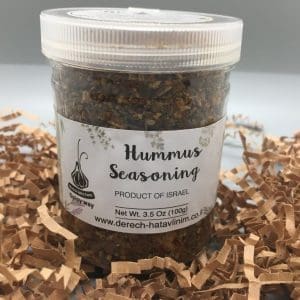
      This is just a basic hummus recipe; made the way my family likes it.  We often make it on Friday so that we have something to snack on or serve with lunch on the Sabbath (Shabbat) that we don’t have to prepare.  We serve it with pita bread and veggies or put it on sandwiches or in wraps.  Sometimes we double the recipe so there’s plenty to go around and leftovers in the fridge.

      Ingredients

      • 3 cans garbanzo beans (leave a few whole if you plan to garnish with them)
      • 1/3 cup tahini
      • ½ cup lemon juice
      • 1 teaspoon salt
      • 4 cloves garlic, halved (or more if you like garlic as much as we do!)
      • 1 tablespoon olive oil
      • Paprika
      • Parsley (fresh or dried)

      Blend garbanzo beans, tahini, lemon juice, salt, and garlic in blender or food processor until smooth.  Add small amounts of water to aid in blending if necessary.

      Transfer mixture to a serving bowl and drizzle oil over hummus.

      Garnish with paprika, parsley, and whole garbanzo beans. 

      Serve with fresh vegetables and pita bread or spread on crackers or sandwiches.

      Enjoy!

      Here’s a convenient dish to use to have your hummus and veggies ready for your Shabbat snacking or lunch.  Fill with hummus and cut veggies on Friday and keep it in the fridge overnight.  Just take it out and serve or take it with you on a picnic!

      A Quick Overview of the Passover Story

      This post contains affiliate links. I only advertise items I personally recommend and may receive a small commission from qualifying purchases. For more information, visit our Affiliate Information Page.

      Passover is the account of God using Moses to lead his people out of slavery in Egypt. While this amazing story is traditionally read during the Passover Seder, read it ahead of time if you’re unfamiliar with it.  Even if you are, reading it again will get your heart in the right place in preparation form Passover and may reveal something new God wanted to show you!

      Our children always watch The Prince of Egypt at least a few times during the Passover season. They pretty much know it by heart, but it never fails to bring up some great conversations about different aspects of the story.

      The Passover itself can be found in Exodus 12, but start in Exodus 3 and read through chapter 15 for the whole story. While this summary can be read during a Seder or used for a brief re-cap, there’s no substitute for the bible version, so make sure to read it and take time to marinate in the awe of it sometime. Its message is life-changing!

      Here’s a basic chapter breakdown (very paraphrased):

      • Exodus 3: God talked to Moses from the burning bush.  He told Moses he had heard the cries of His enslaved people and of His plan to rescue them from Pharaoh in Egypt.  He told Moses that Pharaoh wouldn’t listen at first, but he would later after he saw the wonders God would perform. 
      • Exodus 4: Moses came up with some excuses as to why he shouldn’t be the one to carry out God’s plan.  God got a bit miffed that Moses tried to get out of the job, then assured him he was well-equipped and the right man to lead the exodus of His people.  Moses left for Egypt, and his brother, Aaron, met him along the way.  Aaron told the Hebrew people of the plan when they arrived in Egypt.
      • Exodus 5: Moses and Aaron appeared before Pharaoh and told him they were sent by God to take His people out of Egypt.  Pharaoh then had his taskmasters increase the work of the Hebrew slaves.  The Hebrew people turned on Moses because he’d caused them even more grief by angering Pharaoh.  Moses questioned God because of the harsh circumstances brought on the Hebrew people.
      • Exodus 6: God told Moses He knew what He was doing and that He would do exactly as He said.  Moses attempted to tell all of this to the enslaved people, but their spirits had been broken and they refused to listen.  God once again told Moses to ask Pharaoh to let the people go but Moses was hesitant.  God said, “I’m God.  I say do it anyway”.
      • Exodus 7: God said, “Go and tell Pharaoh to let the people go.  His heart will be hardened, and he won’t, but I will multiply my signs and wonders in Egypt.  Also, do that miracle I told you to”.  Before Pharaoh again, Moses threw down his staff, which turned into a serpent.  Pharaoh again didn’t listen.  God then told Moses to tell Pharaoh that the Nile River would be turned to blood.  Moses dipped his staff in the Nile, and it turned to blood, and everything died, but Pharaoh again didn’t listen.  God said to tell Pharaoh that a massive frog infestation was next.
      • Exodus 8: God told Moses to tell Aaron to stretch his staff out over the waters of Egypt and frogs covered the land when Aaron obeyed.  Pharaoh summoned Moses and Aaron and told them to ask God to take the frogs away.  Moses cried out to God about the frogs.  The frogs died and were piled up and made all of Egypt stink.  Pharaoh hardened his heart again.  God told Moses to have Aaron strike the dust and, when he did, it turned into gnats, which filled the land of Egypt.  The next plague was of flies.  They ruined all the land of Egypt, except Goshen, where the Hebrew people lived.  Pharaoh agreed to let the people go but changed his mind once God removed the flies.
      • Exodus 9: A plague was brought on the Egyptian livestock and they died.  Still Pharaoh didn’t let the people go.  A plague of boils and sores followed.  It again only affected the Egyptians and Pharaoh again refused to let the people go.  God said He could’ve wiped the Egyptians out by now but hadn’t so He could show His power.  The next plague was hail, which destroyed everything and everyone that wasn’t protected.  It only fell on Egypt, not Goshen.  Pharaoh agreed to let the people go, then again changed his mind.
      • Exodus 10: Two plagues were sent in this chapter – locusts to destroy the rest of Egypt’s land and a terrible darkness.  Again, Goshen was spared.  Pharaoh still refused to free the slaves.
      • Exodus 11: Moses warned Pharaoh that the next plague would be the death of the firstborn of all Egypt.  Both livestock and humans would be affected but the Hebrew people would be kept safe.  Pharaoh still did not let the people go.
      • Exodus 12: The Passover begins. God told Moses and Aaron the instructions to give the Hebrew people for protection from the plague of the firstborn.  They were to slaughter a lamb and paint its blood on the doorpost or their house.  Instructions were given for the cooking and eating of the meat and this was called God’s Passover.  When God brought this plague onto Egypt, the blood on the doorposts caused Him to pass over the homes of the Hebrew people.  God repeated the command to observe this Passover Feast forever many times in this chapter.  Pharaoh finally caved and let the Hebrew people go.  They fled Egypt.
      • Exodus 13: God commands the people to set apart every firstborn for Him and gives further instructions for the observation of Passover.  God led the people to the Red Sea in a pillar of cloud by day and a pillar of fire by night.
      • Exodus 14: Pharaoh realized what he had done and went after the Hebrew people to bring them back.  The people were then trapped between the Egyptians and the Red Sea.  God miraculously divided the sea so His people could cross, then closed the divide on the Egyptians as they followed, drowning them.
      • Exodus 15: Moses and his sister, Miriam, sang songs of praise to God for saving them and bringing them out of Egypt.  They then headed into the wilderness as God’s free people.

      It’s such an awesome story, isn’t it? I can’t help wondering what took Pharaoh so long. I’d like to think I’d cave long before the 10th plague, but it does say God hardened his heart, so there’s that. Please read about the Passover and the Exodus with a heart softened to hear what God has to teach you through it. Don’t let it become so familiar that you miss God’s supernatural glory in all of it!