Author: Holy Branches

I’m a Gentile Believer, a devoted mother of five wonderful children, and the wife of an amazing husband. Nature, gardening, and dance bring joy and inspiration to my life. In my spare time, I play the piano, care for my garden, or study the Bible in Hebrew. And I’ll drop just about anything for a game of cards. My unwavering quest for a genuine relationship with the God of the Bible has driven me to delve deeply into His Word, which guides my journey and shapes my life's path. This exploration, combined with dedication to living out my faith, is at the heart of my writing. I seek to share my insights and discoveries with readers, encouraging them to embark on their own spiritual journeys.

That Time Jesus Quoted the Torah

This post contains affiliate links. I only advertise items I personally recommend and may receive a small commission from qualifying purchases. For more information, visit our Affiliate Information Page.

Many of Jesus’s most well-known words have even more meaning than we initially understand. Many Christians wonder, “Did Jesus quote the Old Testament?” The answer is yes, dozens of times. He often quoted the Old Testament in his teachings, bringing its laws and lessons to the forefront of the Christian faith.

The Torah

The term Torah most commonly refers to the first five books of the Bible, Genesis through Deuteronomy, also known as the Books of Moses. Sometimes people use the word more broadly to refer to the entire Hebrew Scriptures (the Tanakh), though this is technically a different collection of books. In Jewish tradition, Torah can also refer to both the Written Torah (the first five books) and the Oral Torah, the body of rabbinic teachings passed down alongside the written text. In this article, we’ll focus specifically on the times Jesus quoted the Written Torah, though He also frequently quoted and referred to the rest of the Hebrew Scriptures.

Some believe that the Old Testament no longer plays an important role in the Christian life. Proponents of this way of thinking argue that, because of Jesus’s sacrifice on the cross and the resultant New Covenant, the Old Testament and its archaic commands and stories no longer influence our faith. I couldn’t disagree more with this way of thinking! This does not mean that believers are saved by keeping the Law. Rather, the Torah continues to reveal God’s character, His wisdom, and His instructions for holy living. God’s Word makes clear in both the New and the Old Testaments that the Old Testament is indeed quite relevant to our Christian walk when it says the following:

All Scripture is inspired by God and profitable for teaching, for reproof, for correction, for training in righteousness; so that the man of God may be adequate, equipped for every good work. (2 Tim. 3:16-17)

How blessed is the man who does not walk in the counsel of the wicked,

Nor stand in the path of sinners,

Nor sit in the seat of scoffers!

But his delight is in the law of the Lord,

And in His law he meditates day and night. (Psalm 1:1-2)

Jesus and the Torah

But more importantly, our Savior Jesus himself saw the importance of the Torah. He told us specifically that he didn’t come to abolish the Law (Matt. 5:17) and that it’s easier for heaven and earth to pass away than even one stroke of a letter of the Law to fail (Luke 16:17). 

He not only directly told us of the value of God’s Laws, He quoted the Torah, where we find these Laws, a LOT. Most of his well-known quotes are either direct quotes from the Old Testament or are references to verses throughout it. He knew that much of his audience was of Jewish heritage, like himself, and that they knew the scriptures very, very well. As Gentile Christians, we are sometimes confused by his Old Testament references, but his Jewish audience would have understood completely what he was referencing and why – even though some of them disagreed and thought him blasphemous.

But Jesus didn’t just include references from the Old Testament in his teachings for the audience present at the time; he included them for us, too! He knew that his words would be recorded and read for millennia, and he said exactly what he knew all of us would need to hear. This happened more times than I’m able to list here, but below are just a few of the times Jesus refers to the Torah to make his point.

The Greatest Commandment

“Teacher, which is the great commandment in the Law?” And He said to him, “‘shall love the Lord your God with all your heart, and with all your soul, and with all your mind.’ This is the great and foremost commandment. The second is like it, ‘You shall love your neighbor as yourself.’ On these two commandments depend the whole Law and the Prophets.” (Matt. 22:36-40 and Mark 12:28-31)

Judaism traditionally has 613 laws, and in this situation, Jesus’ Jewish audience tested him to see if he knew the correct answer to their question. Of course, he did, and he quoted what’s known as the Shema from the book of Deuteronomy.

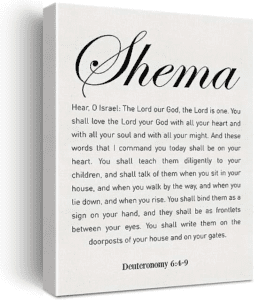
Hear, O Israel! The Lord is our God, the Lord is one! You shall love the Lord your God with all your heart and with all your soul and with all your might. (Deut. 6:4-5)

He also adds the second most important commandment from Leviticus.

You shall not take vengeance, nor bear any grudge against the sons of your people, but you shall love your neighbor as yourself; I am the Lord. (Lev. 19:18)

During the Sermon on the Mount

In the Sermon on the Mount, Jesus takes some well-known parts of the Torah and extends obedience to them even further. He encourages his audience to not only do the minimum to obey these commands but to really take the commands to heart and not even come close to disobeying them.

In reference to the command not to murder in Exodus 20:13, Jesus says:

“You have heard that the ancients were told, ‘You shall not commit murder’ and ‘Whoever commits murder shall be liable to the court.’ But I say to you that everyone who is angry with his brother shall be guilty before the court; and whoever says to his brother, ‘You good-for-nothing,’ shall be guilty before the supreme court; and whoever says, ‘You fool,’ shall be guilty enough to go into the fiery hell. (Matt. 5:21-22)

Yikes! That’s convicting to pretty much all of us. But he goes on from there to cover more of the commandments given in Exodus.

“You have heard that it was said, ‘You shall not commit adultery’; but I say to you that everyone who looks at a woman with lust for her has already committed adultery with her in his heart. If your right eye makes you stumble, tear it out and throw it from you; for it is better for you to lose one of the parts of your body, than for your whole body to be thrown into hell. If your right hand makes you stumble, cut it off and throw it from you; for it is better for you to lose one of the parts of your body, than for your whole body to go into hell. (Matt. 5:27-30)

Then, he refers to a command in Deuteronomy (24:1) that deals with fair divorce and provisions for women when a man leaves her. He extends the divorce requirement from mere obedience to a heart matter when he points out that a man can’t leave his wife just on a whim or because he’s lost interest in her.

“It was said, ‘Whoever sends his wife away, let him give her a certificate of divorce’; but I say to you that everyone who divorces his wife, except for the reason of unchastity, makes her commit adultery; and whoever marries a divorced woman commits adultery. (Matt 5:31-32)

When Tempted

During the 40 days that Satan was tempting Jesus, Jesus rebuked Satan when he twisted God’s words to try to trip Jesus up and cause him to sin. His responses remind himself, Satan, and us what God really said and where Jesus’s allegiance lies.

And the tempter came and said to Him, “If You are the Son of God, command that these stones become bread.” But He answered and said, “It is written, ‘Man shall not live on bread alone, but on every word that proceeds out of the mouth of God.'” (Matt. 4:3-4 and Luke 4:3-4)

Here, Jesus refers to Deuteronomy 8:3, which says, “He humbled you and let you be hungry, and fed you with manna which you did not know, nor did your fathers know, that He might make you understand that man does not live by bread alone, but man lives by everything that proceeds out of the mouth of the Lord.”

Then Jesus uses words from the Torah to again refute Satan.

Then the devil took Him into the holy city and had Him stand on the pinnacle of the temple, and said to Him, “If You are the Son of God, throw Yourself down; for it is written,

‘He will command His angels concerning You’;

and

‘On their hands they will bear You up,

So that You will not strike Your foot against a stone.'”

Jesus said to him, “On the other hand, it is written, ‘You shall not put the Lord your God to the test.'” (Matt. 4:5-7 and Luke 4:9-12)

 Jesus’s response points to Deuteronomy 6:16, “You shall not put the Lord your God to the test, as you tested Him at Massah.”

Again, the devil took Him to a very high mountain and showed Him all the kingdoms of the world and their glory, and he said to Him, “All these things I will give You, if You fall down and worship me.” Then Jesus said to him, “Go, Satan! For it is written, ‘You shall worship the Lord your God, and serve Him only.'” (Matt. 4:8-10 and Luke 4:5-8)

During this last test, Jesus once again takes a command from the Torah and holds it up against Satan’s temptation. This one comes from Deuteronomy 6, also. This time, it’s from verse 13. It says, “You shall fear only the Lord your God; and you shall worship Him and swear by His name.”

Jesus quoted the Torah because it reveals the heart and character of God. From answering questions about the greatest commandment to resisting Satan in the wilderness, He continually pointed people back to the Scriptures they already had. He didn’t treat the Torah as outdated or irrelevant. He used it to teach truth, correct error, and call people to faithful obedience.

As followers of Jesus, we should treasure the same Scriptures He treasured. The more we understand the Torah, the more clearly we understand His teachings, His mission, and the rich biblical foundation of our faith. If you’ve never taken the time to study the Torah for yourself, there is no better place to begin than with the words of the One who quoted it so often.

Holy Branches’ Favorite 2026 Prime Day Finds

Amazon Prime deals are available from June 23-26.


Books


Decor


Flash Cards


Jewelry


Passover


Bibles


Clothing


While you’re shopping for Prime Day, don’t forget to check out my books!

Where Messianic Faith Meets Real Impact: The Jerome Fleischer Day School in Zambia

Give Where Your Faith and Your Giving Align

Looking for a place to give that truly aligns with your faith?

There are many ministries doing meaningful work around the world, but every so often, you come across one that stands out not only in what they do, but in what they believe.

Learn more about the Jerome Fleischer Day School here.

Messianic Jewish Africa Support is serving communities in Zambia with a mission that is both deeply Biblical and firmly rooted in faith. What makes this ministry unique is its commitment to a Messianic Jewish expression of faith, proclaiming Yeshua while honoring the foundation of Scripture in its fullness.

For those who care about walking out a faith that reflects the whole counsel of God’s Word, this matters.

MJAS is not only sharing truth—they’re living it out in tangible, life-changing ways.

Through their work, they:

  • Care for orphans and vulnerable children
  • Support widows and families in need
  • Establish and disciple Messianic congregations
  • Provide medical care, education, and outreach to remote communities

Learn more about the Jerome Fleischer Day School and the Messianic Jewish Africa Support here.

At the heart of this ministry is their day school in Lusaka, where hundreds of children—many of them orphaned or at risk—are being equipped for a different future.

These students receive:

  • A quality education
  • Daily meals
  • Spiritual discipleship
  • A safe and stable environment

But more than that, they are being raised up to stand on their own! They become leaders, contributors, and people of faith within their own communities.

This is not about creating dependency. It is about cultivating independence, responsibility, and purpose.

And right now, there is a simple, powerful way to be part of that work.

The greatest need is for student sponsorships.

For just $45 per month, you can directly impact a child’s life, providing the education, nourishment, and spiritual foundation they need to move forward with strength and hope.

Don’t just give—give where your beliefs are lived out.

I personally know Rabbi Alex and his wife, Fay, who passionately lead this ministry, and I can confidently say they are faithful, trustworthy, and deeply committed to the calling God has placed on their lives. I also personally know the MJAS board members, committed servants of Yeshua, working hard to put God’s word into action and serve the orphans and bring hope to their lives – both practically and spiritually!

If you’ve been looking for a place to give where your beliefs and your giving truly walk together—this is an opportunity to step into something meaningful.

Consider becoming a sponsor today and help raise up the next generation to stand strong in faith and walk in purpose.

Learn more about the Jerome Fleischer Day School here.

Paul’s Affirmation of the Old Testament Law: Insights from His Letters

This post contains affiliate links. I only advertise items I personally recommend and may receive a small commission from qualifying purchases. For more information, visit our Affiliate Information Page.

As Believers, we value the words of the entire Bible, from Genesis to Revelation. We know the Old Testament Law points us to God’s holiness and our need for a Savior, and it’s fascinating to see how the Apostle Paul, discussed it in his writings. Some might think Paul was all about ditching the law for grace. He emphasized we’re saved by faith in Christ alone, but he also had a deep respect for the Old Testament Law. In fact, he often upheld it as good, holy, and even something we establish through our faith.

I want to walk you through some key passages from Paul’s writings where he supports and affirms Old Testament Law. We’ll stick to his authenticated letters (like Romans, Corinthians, Galatians, Ephesians, 1&2 Timothy, and Titus). The verses are listed below but, as with everything in the Bible, make sure to take some time and read these verses in context to gain a much clearer understanding of what Paul intended to convey in his writings.

Romans: The Law as Holy and Established by Faith

Paul’s letter to the Romans is a theological masterpiece, written in midrashic style, typical for his time and Pharisaic training, and he spends a good chunk of it discussing the Law. He makes it clear that faith doesn’t cancel out the Law; it actually confirms it. Here are example verses:

  • Romans 3:31: “Do we then nullify the law through faith? May it never be! On the contrary, we establish the law.” Here, Paul is adamant—faith in Jesus doesn’t make the law irrelevant. Instead, it upholds and fulfills its purpose, showing us our sin and leading us to Christ.
  • Romans 7:7: “What shall we say then? Is the law sin? May it never be! On the contrary, I would not have come to know sin except through the law; for I would not have known about coveting if the law had not said, ‘You shall not covet.'” Paul quotes directly from the Ten Commandments (Exodus 20:17) to illustrate how the law reveals sin, which is a good thing because it drives us to repentance.
  • Romans 7:12: “So then, the law is holy, and the commandment is holy and righteous and good.” Straightforward praise here—Paul calls the law holy! He sees it as reflecting God’s perfect character.
  • Romans 7:14: “For we know that the law is spiritual, but I am of the flesh, sold into bondage to sin.” The law isn’t the problem; our sinful nature is. Paul affirms the law’s spiritual depth.
  • Romans 7:22: “For I joyfully concur with the law of God in the inner man.” Deep down, Paul delights in God’s law, echoing the psalmist’s love for it (like in Psalm 119).
  • Romans 13:8-10: “Owe nothing to anyone except to love one another; for he who loves his neighbor has fulfilled the law. For this, ‘You shall not commit adultery, You shall not murder, You shall not steal, You shall not covet,’ and if there is any other commandment, it is summed up in this saying, ‘You shall love your neighbor as yourself.’ Love does no wrong to a neighbor; therefore love is the fulfillment of the law.” Paul quotes multiple commandments (from Exodus 20 and Leviticus 19:18) and ties them to love, showing how the moral heart of the law endures.

1 Corinthians: Keeping God’s Commandments Matters

In his first letter to the Corinthians, Paul addresses practical church issues but still nods to the law’s importance.

  • 1 Corinthians 7:19: “Circumcision is nothing, and uncircumcision is nothing, but what matters is the keeping of the commandments of God.” Even amid debates about Jewish customs, Paul prioritizes obeying God’s commands, rooting this in the Old Testament’s moral framework.
  • 1 Corinthians 9:8-9: “Do I speak these things according to the ways of men? Or does not the law also say the same? For it is written in the law of Moses, ‘You shall not muzzle the ox while he is threshing.’ God is not concerned about oxen, is He?” Quoting Deuteronomy 25:4, Paul uses the law to support fair treatment of workers, applying it broadly.

Galatians: Fulfilling the Law Through Love

Galatians, also written in typical midrashic style, is where Paul fights hard against legalism, but even here, he doesn’t trash the Law. He shows how it’s fulfilled in Christ.

  • Galatians 5:14: “For the whole law is fulfilled in one word, in the statement, ‘You shall love your neighbor as yourself.'” Another nod to Leviticus 19:18, emphasizing love as the law’s essence.
  • Galatians 5:23: Speaking of the fruit of the Spirit (love, joy, peace, etc.), Paul adds, “against such things there is no law.” In other words, living by the Spirit aligns perfectly with the Law’s righteousness.
  • Galatians 6:2: “Bear one another’s burdens, and thereby fulfill the law of Christ.” While this points to Jesus’ teachings, it builds on the Old Testament’s call to love and community, showing continuity.

Ephesians: Honoring Specific Commandments

Paul’s letter to the Ephesians is full of practical advice for Christian living, including direct quotes from the Law.

  • Ephesians 6:1-3: “Children, obey your parents in the Lord, for this is right. ‘Honor your father and mother’ (which is the first commandment with a promise), so that it may be well with you, and that you may live long on the earth.” Straight from Exodus 20:12 and Deuteronomy 5:16, Paul upholds this commandment and its promise, applying it to Believers.

1 Timothy: The Law’s Proper Use

In guiding young Timothy, Paul clarifies the Law’s role without diminishing it.

  • 1 Timothy 1:8: “But we know that the Law is good, if one uses it lawfully.” Paul affirms the Law’s goodness when applied correctly, not for justification, but for guiding righteous living and exposing wrongdoing (verses 9-10 list sins echoing the commandments).

Wrapping It Up: Paul’s Balanced View

Isn’t it encouraging to see how Paul weaves Old Testament Law into his teachings? He never pits grace against the Law; instead, he shows how faith in Jesus fulfills its deepest intent. The Law reveals God’s standards, convicts us of sin, and points to the Savior who perfectly kept it on our behalf. As we walk in the Spirit, we naturally live out its moral principles through love.

Although we’re often taught that the Old Testament upholds God’s Law and the New Testament says it no longer applies, we can see from the verses above that Paul’s writings don’t contradict the positive view of the Law in the Old Testament. Neither do Jesus’s teachings on the Law. For further reading on this subject, see Does Old Testament Law Apply to Christians?

The Blessing of the Seventh Day: Exploring the Sabbath Through Scripture

Part of the Grafted In Bible Study Series

What if the Sabbath is more than a command… but a gift?

The Sabbath is one of the most talked about—and often misunderstood—parts of Scripture. Some see it as outdated. Others as essential. But what does the Bible actually say?

The Blessing of the Seventh Day invites you to explore the Sabbath through the lens of all of Scripture—from creation to covenant, from the words of the prophets to the life and teachings of Jesus. Rather than relying on tradition or assumption, this study guides you back to the Word of God to discover His heart for this set-apart day.

Through eight weeks of Scripture-based discovery, you will:

  • Trace the Sabbath from Genesis to the New Testament
  • Explore its role as a sign of God’s covenant
  • Examine what Jesus taught about the Sabbath
  • Consider what it means to be “grafted in” to God’s promises

Whether you are new to this topic or revisiting it with fresh eyes, this study is designed to help you engage deeply with Scripture and respond in faith.

This is not about legalism or earning salvation.
It’s about rediscovering a rhythm God created for your good.

Come and see the Sabbath not as a burden—
but as a blessing.

Part of the Grafted In Bible Study Series.

Click here for the instant file download.

The Names of God: יהוה, the God of Israel

This post contains affiliate links. I only advertise items I personally recommend and may receive a small commission from qualifying purchases. For more information, visit our Affiliate Information Page.

Studying the Bible can teach us so much about life, but perhaps the most important thing we can learn from the Bible is about God’s character. When we study, we see what God can do and how He interacts with His people. As His character is revealed, so are His attributes, and we can get to know who He is! 

If you’re interested in even more names of God, here are other articles in this series you may enjoy.

The Names of God: Revealing God’s Personality Traits

The Names of God: Elohim, The Mighty One

The Names of God: Adonai, Our Lord and Master

Click here for a free printable PDF Names of God Chart to use in your studies! 

If you’re new to the Hebrew language, starting with my posts on the Hebrew Alphabet and the Hebrew Vowels may be helpful.

Yahweh – יהוה

This name is the most common one of God used in the Bible. יהוה is used 6,823 times and found in all but three books of the Old Testament (Ecclesiastes, Esther, and Song of Songs). It’s called the Tetragrammaton, Greek for “made of four letters.” In English translations, it appears as “LORD” in all capital letters to distinguish it from other Hebrew words for God. 

Since no vowels accompany these four consonants in the oldest texts, there’s some speculation on the pronunciation of this name. Many agree that it’s pronounced “Yahweh,” with the vowels appearing as יַהְוֶה, yet others propose that the vowels are as such instead יְהֹוָה. This second pronunciation would render another familiar name for God – “Yehovah” or the common translation of “Jehovah.”

Most Hebrew words are derived from a 3-consonant root word, and the words derived from that root have similar meanings. יהוה comes from the Hebrew root word meaning “to be.” This translation would make sense as God referred to Himself as “I AM,” a form of the verb “to be.”

יהוה is used as God’s name mostly in situations where He’s interacting with His people. One example is when He appeared to Moses in the burning bush (Ex. 3:2) or breathed life into Adam (Gen. 2:7). 

A shortened form of Yahweh, Yah (יָהּ), is used in many places. When Moses and the people of Israel sing, “The LORD is my strength and song” (Ex. 15:2), Yah is the name used for “LORD.”

As the name of God is holy, many don’t speak it out of reverence and respect. Instead, it’s often replaced by “HaShem,” meaning “the name,” or “Adonai,” meaning “my Lord,” as well as other terms of honor.

Many Christians are interested in returning to more literal interpretations of scripture, including the name of God.  The Scriptures Bible from the Institute for Scripture Research has restored יהוה as the name for God throughout the text, rather than replacing it with other words.

יהוה is combined with other words to show us His character even more precisely. Below are examples of this. Each of them reveals yet another aspect of God’s awesome character. 

Yahweh Elohim יהוה אֱלֹהִים

This name can be translated as “LORD God,” but it emphasizes God’s creative nature as in Genesis 2:4. One variation on this is יְהוָֽה אֱלֹהָי, Yahweh Elohai, which means “the LORD my God” instead. Another variation is when God addresses His people: “I am the LORD your God.” This is Yahweh Elohechem, יְהוָה אֱלֹהֵיכֶֽם.

Yahweh El Elyon יהוה אֵל עֶלְיֹון

This term means “LORD God most high,” found in Genesis 14 when Melchizedek blesses Abram just before God promises him a son and countless descendants. It’s also found in Psalms in the form of praise to God.

Yahweh Elohei David יהוה אֱלֹהֵי דָּוִד

Isaiah prophecies to Hezekiah on his supposed deathbed that the “God of his father, David,” would add fifteen years to his life. We can see that God was indeed the God of King David as we get to know many aspects of God through David in Psalms and otherwise.

Yahweh Roie יהוה רֹעִי

Most Christians are very familiar with this aspect of God. This name means “God my shepherd” and is found in the first verse of Psalm 23. It’s translated as “The LORD is my shepherd…”.

Old Testament Hebrew Vocabulary Cards: Second Edition

Yahweh Tsuri V’goali יהוה צוּרִי וְגֹאֲלִי

Here’s another name given to God by King David in the Psalms. From Psalm 19:14, God is called David’s “rock and Redeemer” after giving glory to God for His Laws, judgments, and commands.

Yahweh Sali יהוה סַלְעִי

This name, also given by King David, means “God my hiding place.” This phrase is similar to “God, my rock and redeemer” above, but here, the word “rock” can also mean “cliff” or “boulder.” It can also be translated as “refuge.”

Yahweh Avienu יהוה אָבִינוּ

“God, our Father” is what this Hebrew name for God means. It’s found in the book of Isaiah, chapters 63 and 64, where Isaiah pleads for mercy for the people of Israel, as well as David’s prayer in 1 Chronicles 29:10-20.

Yahweh Shalom יהוה שָׁלֹום

“The LORD is peace” is what Gideon named the altar he built in Judges 6:24. This was just after an angel appeared to him and told him that God would help him defeat the Midianites, which he later did.

But wait, didn’t God bring war and not peace in this case? Why say that God is peace if He promised the Israelites a war victory?

The peace was brought to God’s people through the defeat of the Midianites because Midian had greatly oppressed the Israelites. Defeating them with God’s help brought freedom and peace.

Yahweh Rof’ekah יהוה רֹפְאֶךָ

Also, Yahweh Rafa (רָפָא) is a name God gave to Himself in Exodus 15:26. He said that he would spare the Hebrew people from the plagues he put on the Egyptians if they were obedient. This name means “healer,” and He has control over our bodies as our Creator. He can heal and protect.

Yahweh Yir’eh יהוה יִרְאֶה

This name comes from Genesis 22:14 when Abraham is about to sacrifice Isaac out of obedience to God. It means “God provides” or “God who sees”.

Although this name is commonly translated as “Jehovah Jireh,” there’s no “j” sound in Hebrew as there is in English, so a more accurate pronunciation of this name would be “Yuh-hoe-vah yeer-eh”.

For us today, throughout the Bible, even in situations of great persecution like what Paul experienced, God sees our circumstances and knows exactly what’s needed to fulfill His plan for His people. We can be sure that He’s faithful and will always provide!

Yahweh Elohai Yisrael יהוה אֱלֹהֵי יִשְׂרָאֵֽל

This one is used many times throughout the Old Testament to emphasize that our God is the one being referred to and to distinguish Him from the gods of the people in the surrounding areas.

Yahweh Nissie יהוה נִסִּי

Used only once in the Bible, Exodus 17:15, this is the name Moses gave the altar he built after the Israelites defeated the Amalekites. It means “God, my banner.” The word “banner” could also be “exaltation” or “refuge” as well. Whichever of those he meant, Moses was attributing their victory to God in naming the altar.

Yahweh Maqadashem יהוה מְקַדִּשְׁכֶֽם

This is a name God gives Himself, mostly while He’s giving His Law to His people. It means “LORD, your sanctifier.” We don’t have the power to sanctify ourselves or anything, for that matter. Only our holy God can declare something holy.

Yahweh Oseinu יהוה עֹשֵׂנוּ

This name refers to God’s creative abilities and means “God, our Maker.” It’s found in Psalm 95, which implores us to worship Him and recognize that we’re His people. God is our Creator! He made us, and we are His! Isn’t that amazing?!

Yahweh Shamah יהוה שָׁמָּה

“God is there” is what this name means. From Ezekiel 48:35, this is a prophecy stating the name of the city God will inhabit in the Millennial Kingdom. The city’s name clarifies that God will be physically present there. How amazing! I wonder what it will be like!

Yahweh Tsidqenu יהוה צִדְקֵנוּ

Tsidqenu (pronounced tseed-qay-noo) means righteousness, so this name means “God, our righteousness.” It’s used twice in Jeremiah, chapters 23 and 33, to predict the Messiah. We’re not righteous. But through Jesus, we can appear righteous before God!

Click here for a free printable PDF of my Names of God Chart!


What Does Jesus Say About Old Testament Law?

This post contains affiliate links. I only advertise items I personally recommend and may receive a small commission from qualifying purchases. For more information, visit our Affiliate Information Page.

Many Christians are taught that Jesus came to move God’s people away from the Law. Yet when we read the Gospels carefully, an unexpected pattern emerges: Jesus repeatedly affirms God’s commandments, assumes their ongoing validity, and calls His followers to obedience rooted in love.

This article gathers Jesus’ own words, across all four Gospels, where He speaks in support of God’s Law, righteousness, and commandments, not as a means of earning salvation, but as the faithful expression of life in God’s kingdom.


Obedience and Eternal Life

(Matthew 19:16–17)

A man approaches Jesus with the most important question anyone can ask:

“Teacher, what good thing shall I do to obtain eternal life?”

Jesus’ response is direct and striking:

“If you want to enter life, keep the commandments.”
– Matthew 19:17

Jesus does not dismiss the question, nor does He say the commandments no longer matter. Instead, He affirms them as relevant to life with God. He then proceeds to quote specific commandments from the Torah, treating them as authoritative.


“I Did Not Come to Abolish the Law”

(Matthew 5:17–20)

In the Sermon on the Mount, Jesus addresses the Law explicitly:

“Do not think that I came to abolish the Law or the Prophets; I did not come to abolish but to fulfill.”
– Matthew 5:17

He immediately adds:

“Until heaven and earth pass away, not the smallest letter or stroke shall pass from the Law.”

Rather than minimizing obedience, Jesus warns against relaxing even the least commandment and ties faithfulness to status within the kingdom:

“Whoever does them and teaches them will be called great in the kingdom of heaven.” (Matt. 5:19)

Jesus then deepens the Law, moving from outward actions to heart-level obedience, demonstrating that fulfillment means living it fully, not setting it aside.


Righteousness as Kingdom Living

(Matthew 5:6, 10, 20)

Jesus repeatedly blesses righteousness:

“Blessed are those who hunger and thirst for righteousness.”
– Matthew 5:6

“Blessed are those who are persecuted for the sake of righteousness.”
– Matthew 5:10

He even warns that entry into the kingdom requires a righteousness that surpasses mere external observance (Matt. 5:20) – not less obedience, but truer obedience.

In Scripture, righteousness is inseparable from living according to God’s instruction.


Lawlessness and Final Judgment

(Matthew 7:21–23)

Jesus offers one of His most sobering warnings:

“Not everyone who says to Me, ‘Lord, Lord,’ will enter the kingdom of heaven, but the one who does the will of My Father.”

He concludes:

“Depart from Me, you who practice lawlessness.”
– Matthew 7:23

Notably, those rejected are religiously active and verbally devoted. Their failure is not belief, but lawlessness – living without regard for God’s will.


Love for God Defined by Obedience

(John 14–15)

In the Gospel of John, Jesus repeatedly defines love in covenantal terms:

“If you love Me, you will keep My commandments.”
– John 14:15

“He who has My commandments and keeps them is the one who loves Me.”
– John 14:21

“If you keep My commandments, you will abide in My love, just as I have kept My Father’s commandments.”
– John 15:10

Jesus presents obedience not as legalism, but as the natural expression of love—modeled after His own obedience to the Father.


The Greatest Commandments Come from the Torah

(Matthew 22:37–40)

When asked which commandment is greatest, Jesus quotes directly from the Law:

“You shall love the Lord your God…”
– Deuteronomy 6:4–5

“You shall love your neighbor as yourself.”
– Leviticus 19:18

Jesus then concludes:

“On these two commandments depend all the Law and the Prophets.”
– Matthew 22:40

Love is not presented as a replacement for the Law, but as its summary and foundation. “Love God and love people” are not commands given to replace the Law but as a summary of God’s Laws, fully dependent on and not functioning outside of the Laws as they were originally given.


Mercy, Justice, and the Weightier Matters of the Law

(Matthew 23:23)

When rebuking the Pharisees, Jesus does not criticize obedience itself, but imbalance:

“You have neglected the weightier matters of the Law: justice, mercy, and faithfulness. These you ought to have done, without neglecting the others.”
– Matthew 23:23

This is one of Jesus’ clearest affirmations of the Law. He explicitly says the commandments should be practiced – rightly, not hypocritically.


Jesus Lived in Obedience to the Law

Jesus consistently presents Himself as obedient to the Father:

“I always do the things that are pleasing to Him.”
– John 8:29

“I have kept My Father’s commandments.”
– John 15:10

He celebrates the Passover (Mark 14:12), attends synagogue regularly (Luke 4:16), and teaches from the Law as authoritative Scripture.


A Final Reflection

Jesus never speaks of God’s Law as obsolete, burdensome, or irrelevant. Instead, He:

  • affirms it
  • teaches it
  • deepens it
  • lives it

He warns against lawlessness, praises righteousness, and defines love in terms of obedience.

This does not contradict salvation by grace. It clarifies what grace produces.

As Jesus Himself says:

“Why do you call Me ‘Lord, Lord,’ and do not do what I say?”
— Luke 6:46

Grace does not lead away from obedience—it leads us into faithful, transformed obedience, empowered by the Spirit and rooted in love for God.

For more about Christians and the Law, read Does Old testament Law Apply to Christians? and Paul’s Affirmation of the Old Testament Law: Insights from His Letters

10 Ideas for a Christian Shavuot

This post contains affiliate links. I only advertise items I personally recommend and may receive a small commission from qualifying purchases. For more information, visit our Affiliate Information Page.

Shavuot is one of the seven Biblical feasts listed in Leviticus 23. While many Christians don’t yet celebrate these important days, they’re so meaningful to our faith because all of them in some way point to Jesus as our Messiah!

Many Christians know Shavuot as Pentecost. The apostles were celebrating Shavuot when the Holy Spirit was given to them. As they praised God for giving His Law, He gave them the Holy Spirit, which enabled the Law to be written on hearts—theirs and ours!

The command to celebrate Shavuot includes bringing offerings to the Temple, which is not currently standing. Because of this, we can’t keep that command as stated in the Bible. But we can keep the tradition in order and focus on the themes of the celebration – God’s provision of both His Law and the Holy Spirit.

Since most of us aren’t yet experts at celebrating Shavuot, it’s helpful to have some ideas of how to observe it. Here are 10 great ways we can celebrate Shavuot as Christians.

1. Pray

As this is a celebration of the giving of the Holy Spirit, communicate with the Spirit in prayer. Ask for more of the Spirit’s influence in your life. Make sure to keep your heart open to what He has to teach you and convict you of.

To help you focus your prayers, the Holy Spirit’s roles include guiding, convicting, teaching, being the source of God’s power and wisdom in us, giving spiritual gifts, sealing our salvation, interceding for us, sanctifying us, and giving knowledge.

Shavuot is also known as the Feast of Proclamation so use this time to give praise to God. Proclaim that He’s your God and that you belong to Him. Proclaim His provision, salvation, and His commands given to set us apart.

2. Read the Stories

The themes of Shavuot include the giving of the Law, the giving of the Holy Spirit, and God’s provision, both for our spiritual and physical needs.  A Jewish Shavuot tradition is to pull an all-nighter, studying the Bible around the clock!  However you choose to study, here are some Bible selections to read to focus your mind and heart on the themes of Shavuot.

  • The Law: Exodus 19; Psalm 1:2, 19:7-11, 29:18, 112:1-6, 119, 128; Proverbs 4:2, 6:20-23; Matthew 5:17-20; Romans 3:31; James 1:25
  • Slavery in and rescue from Egypt: Exodus 3-15 (Summary here)
  • Slavery to sin: John 8:31-35, Romans 6, 8:1-25; Titus 3:1-10
  • Holy Spirit: Jeremiah 31:31-34; Joel 2:28-29; John 14:16-31; Acts 2; Romans 8:26-27
  • Shavuot: Exodus 24:22; Leviticus 23:15-22; Acts 2:1

3. Rest

Since the command for Shavuot says that it should be a Sabbath, make rest a priority. This Sabbath differs from others in that food preparation is just fine, but it’s otherwise a time of rest. Be deliberate about choosing activities that promote togetherness and focus on God.  Find some ideas in my post, “What DO we do on the Sabbath?”.  Don’t let Shavuot go by without intentionally stopping and focusing on the God that provides! 

4. Teach the Children

It’s so important Biblically that we pass our faith on to the next generation!  If you don’t have children of your own, consider teaching your grandchildren or those at your church or synagogue about Shavuot and the amazing truths of God that it highlights. Here are some resources for children on the subject of Shavuot. 

I use the Bible Pathway Adventures Activity Books for my own children and recommend them highly! This one covers the Feast of Shavuot and the other Spring Feasts—Passover, Unleavened Bread, and First Fruits. It also includes lessons on Jesus’s crucifixion and resurrection!

Kid-Friendly Crafts for Shavuot at PJ Library

PJ Library has provided our family with so many helpful resources for teaching our children about Biblical and Jewish holidays and traditions. This page has both crafts and recipes for kids that are relevant to the themes surrounding Shavuot.

5. Provide for the Less Fortunate

Within the command for Shavuot, God specifies that, when harvesting their fields, the Israelites were to leave the corners of the fields and not pick up the harvested grain that fell to the ground during the harvesting process. This was a provision for the poor, the widowed and otherwise, who were without the ability to produce their own food.

Today, provision for the poor looks very different, but we can still demonstrate this care for those who have similar needs in our culture and communities. Your church may have a food pantry that offers supplies to the needy in your community. Even small cities have food banks that are always grateful for donations. Crisis pregnancy centers provide necessities to mothers without the means to get what they need for their little ones. With so many ways to help available, it’s simple for us to reach out and see where we can help those less fortunate.

6. Celebrate Milk and Honey

One Shavuot tradition is to prepare dishes that are sweet and dairy-based. This is to remember God’s provision as milk and honey often symbolize in the Bible. God promised that He would bring the Hebrew people into the “land of milk and honey,” which meant the Promised Land. Of course, He kept His promise as He always does, and they did (eventually) get there!

He provided for them in their land, on the way, and He still provides for all of His people’s needs and will continue! Here are some recipes for dishes to serve during Shavuot to remind you and your family of God’s perfect provision.

Mini Cheesecakes

This recipe is so versatile! You can top it with any fruit you like, ice cream, or chocolate shavings. The crust can be vanilla wafers, as called for in the recipe, or you can use an Oreo or Graham Cracker crust.

Marinated Feta

I love feta! This recipe would be a wonderful salad topping, could be included on a charcuterie platter, or served as an appetizer.

Deluxe Noodle Kugel

Kugel is a traditional Jewish recipe commonly served at Rosh Hashanah. This delicious kugel recipe is very similar to cheesecake, making it a fitting dish for Shavuot as well. My family likes this recipe, but it’s also the one I used when I won the kugel contest at our synagogue! Since this was only the second kugel I’d made in my life, winning surprised me more than anyone else there!

And if you’re brave enough to include some little ones in your Shavuot cooking, here are 7 Simple Shavuot Recipes Kids Can Make from PJ Library.

7. Serve Two Challah Loaves

While many serve two loaves of Challah bread on Shabbat (the Sabbath) weekly to celebrate God’s provision, Shavuot is another opportunity to celebrate it as well. Serving two loaves shows that God has given us plenty but also reminds us of the two loaves required as an offering in the Shavuot command in Leviticus 23.

Here is the Challah Bread recipe I use. It will make two medium-sized loaves or three small ones.

8. Have a Holy Convocation

Another part of the command in Leviticus, a holy convocation, is a get-together, not just for fellowship but to focus on God. During Shavuot, we focus on His blessings, His Laws, and His Spirit. This would be a great time to find a Messianic synagogue near you and visit if you don’t already have one. The UMJC has a directory if you need help finding one in your area. You could also have a Shavuot get-together with people from your church or Bible study. The focus here should be on worshipping and studying as a community of believers.

9. Get Baptized

If you’ve considered being baptized as an outward expression of your faith, and haven’t yet, Shavuot is a great time to do it! The significance of celebrating the indwelling of the Holy Spirit on the day of your baptism would be very special!

10. Make a Pilgrimage

Shavuot is one of three “pilgrimage festivals” in the Bible. The command for this says that all males should present themselves before the God of Israel and offer a sacrifice three times a year, on Passover, Shavuot, and Sukkot. Due to the Temple’s absence, we don’t offer sacrifices there on these days but any one of them would be a great time to plan a trip to the city of Jerusalem!

The things we celebrate at Shavuot – God’s provision, His Laws, and the Holy Spirit are so central to our faith as Christians! Check out my calendar for the dates of Shavuot for this year and make some plans to observe it, even if you never have. I bet you’ll find it deeply spiritual and be blessed by setting this time aside to focus on what God has given.

If Shavuot and its significance to our faith is a new concept for you, here’s some further reading on the subject. Written by David Brickner from Jews for Jesus, Christ in the Feast of Pentecost will give you a greater understanding of Shavuot and the countdown to it, as well as how they relate to our Savior.


Recipes for Shavuot

This post contains affiliate links. I only advertise items I personally recommend and may receive a small commission from qualifying purchases. For more information, visit our Affiliate Information Page.

Shavuot is the celebration of God’s provision – His Law, His Spirit, and His son as our Savior. Since milk and honey represent provision and plenty in the Bible, food served at Shavuot is often dairy-based and sweet. Here are some recipes for your Shavuot celebration.

Cheese Blintzes

Try these for a delicious gourmet Shavuot breakfast. A rich cheese filling in a thin egg wrap, and a fruity topping make this the perfect addition to your celebration!

Cream Cheese Danish

I’ll just be honest here and say that this danish requires a lot of self control from me. I could eat the whole thing! It tastes great but is relatively simple to make.

Deluxe Noodle Kugel

A unique Jewish tradition, kugel can be made many different ways. This recipe is very much like cheesecake, making it fitting for your Shavuot table. This is the kugel my family likes best and it’s wonderful for Rosh Hashanah/Yom Teruah as well!

Caprese Appetizer

Here’s a simple appetizer that’s both satisfying and attractive. Dress it up with fun appetizer toothpicks to make them more festive and serve on a pretty platter.

Baklava

This rich and filling Middle Eastern dessert is just heavenly! The heartiness of the nuts balances the sweetness of the honey, all encrusted in buttery, flaky phyllo dough.

Pimento Cheese Sandwiches

Serve them tea style, on a tiered or decorative platter and remove the crusts for a delicate touch. You can make it spicy if you’d like but it’s also just wonderful without the heat.

Marinated Feta

I can think of many ways this recipe can be served during Shavuot. It would make a great salad topping, as well as a tasty addition to a tossed salad or to accompany fruits, nuts, and meats on a charcuterie platter.

Cream Cheese Mashed Potatoes

This is the only way my family eats mashed potatoes. I have some potato haters but they (and the rest of us) like this rich and creamy recipe. It’s great with or without gravy!

Mini Cheesecake

You can make changes to this recipe to tailor it to your liking. Change the fruit on top, garnish with chocolate shavings, or serve with ice cream! The crust could be changed to an Oreo or Graham Cracker crust if that’s what you prefer.

Cheesecake Brownies

This is a favorite of the chocolate lovers in my family. It’s a unique take on brownies and fitting for a Shavuot dessert.

Ice Cream in a Bag

Here’s one for the kids, but the adults will also have fun with it!

Challah Bread

While this recipe isn’t dairy or sweet, challah bread is often served during Shavuot. Two loaves are served to celebrate God’s lavish provision. This recipe will make two medium-sized loaves.

If you’re looking for more ways to celebrate Shavuot, read my post, 10 Ideas for a Christian Shavuot.